Case Study: Using Polyether Ester Antifoam for Marine Discharge Foam Control in a Phosphoric Acid Plant
Direct Answer
For persistent foam in a phosphoric-acid plant marine-discharge system, select an antifoam using the actual acidic, saline and solids-containing stream rather than a clean-water test. The candidate must remain dispersible and effective at the operating pH, temperature and residence time without adding visible oil, deposits or unacceptable discharge contaminants. Compare rapid knockdown and re-formation together with dose demand, suspended-solids behavior, transfer and discharge stability, downstream water quality and compliance parameters. A polyether-ester option may be suitable, but it should be confirmed at the lowest effective dose in a controlled field trial before continuous use.
Last updated: August 2026
Introduction For chemical complexes located in coastal regions, environmental compliance extends beyond simple chemical indicators (like COD or pH). Visual pollution, specifically floating foam at the marine discharge point, has become a critical key performance indicator (KPI) for environmental regulators.
Recently, a large-scale Phosphoric Acid Production Complex partnered with INVINO to solve a persistent compliance challenge: visible foam accumulation at their sea outfall. This case study details our technical diagnosis, solution selection, and the successful results achieved through field trials.
The Challenge: Why Standard Phosphoric Acid Plant Defoamer Failed?
The client, a major fertilizer complex, faced a critical compliance issue. While their standard Phosphoric Acid Plant Defoamer worked well in the high-temperature reactor, it failed completely when applied to the final effluent.
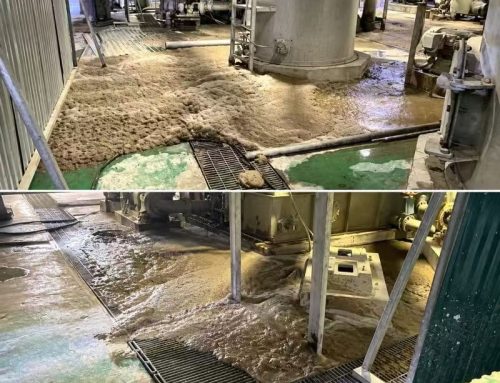
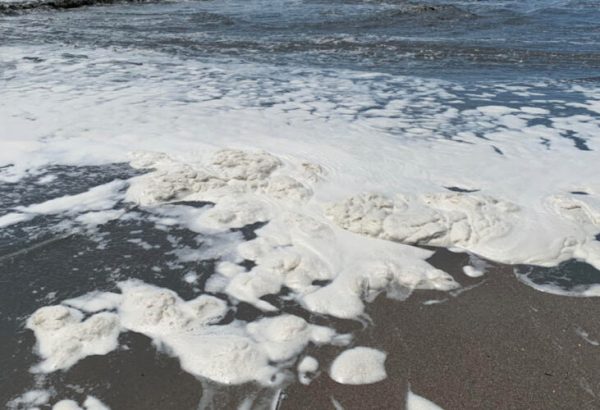
The Symptom: The treated water generated stable foam upon entering the sea, proving that their current chemical regime was insufficient for effective Marine Discharge Foam Control.
.
The Solution: Specialized Effluent Treatment Antifoam
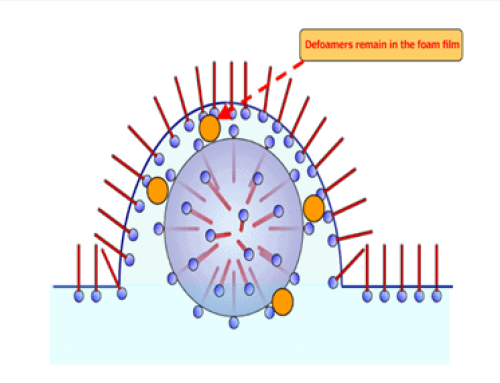
INVINO diagnosed the root cause as “secondary stabilized foam” caused by residual surfactants and salinity. We proposed switching to a specialized Effluent Treatment Antifoam designed specifically for saline and low-temperature conditions, rather than using the process-grade acid defoamer.
Why Choose Polyether Ester Antifoam?
The technical key to success was the chemistry. INVINO’s Polyether Ester Antifoam provided distinct advantages over mineral oil or silicone:
-
Salinity Tolerance: It maintains spreading pressure even in cold seawater.
-
Strong Film Breaking: It effectively destroys surfactant-stabilized foam bubbles.
-
Eco-Friendly: It leaves no oil sheen, meeting strict marine discharge standards.
Results: Achieving Perfect Marine Discharge Foam Control
After a 14-day trial, the results were definitive. The Polyether Ester Antifoam eliminated the visible foam accumulation at the outfall. The plant successfully achieved environmental compliance while optimizing their total chemical costs.
Conclusion Foam control in phosphoric acid complexes requires a segmented approach. While silicone or wax emulsions are suitable for the reactor, Polyether Ester is the scientifically correct choice for marine discharge. Through this cooperation, the client successfully achieved environmental compliance and optimized their chemical treatment costs.