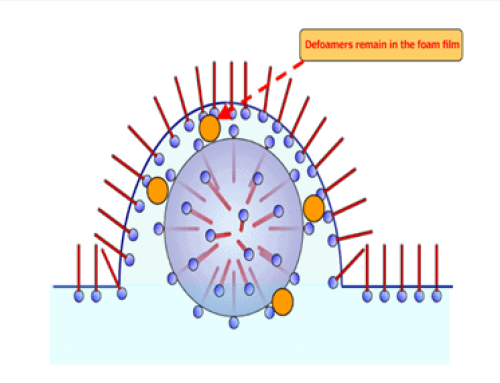
Defoamer for PCE (Polycarboxylate Superplasticizer): Controlling Entrained Air to Preserve Concrete Compressive Strength
The application of Polycarboxylate Superplasticizers (PCE) has fundamentally optimized the water-to-cement ratio in modern concrete. However, the unique molecular structure of PCE — specifically its steric hindrance and surfactant-like properties — introduces a critical side effect: severe air entrainment during the mixing process.
Failure to control these internal voids directly compromises the structural integrity and surface finish of the cured concrete.
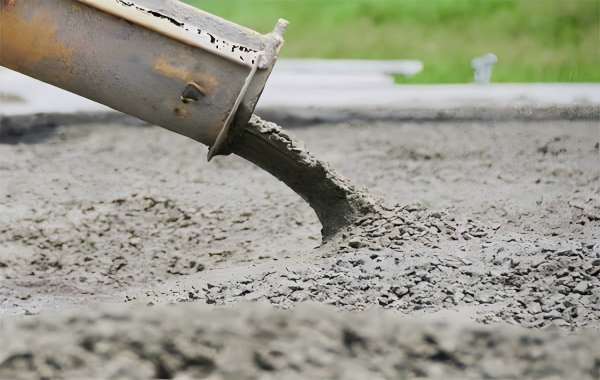
1The Origin of Defect-Causing Voids in PCE Systems
In concrete formulation, it is crucial to distinguish between two types of internal air voids. The objective of adding a defoamer is not to eliminate all air, but to selectively target large entrapped air while preserving the micro-bubble structure.
❌ Entrapped Air (Harmful)
Irregularly shaped voids with diameters exceeding 200μm mechanically trapped during mixing. They provide no freeze-thaw benefits, cause exponential drops in compressive strength, and result in honeycomb defects on demolded concrete.
✅ Entrained Air (Beneficial)
Spherical micro-bubbles in the 10-50μm range. These are strictly necessary to relieve internal hydraulic pressure during freeze-thaw cycles and improve the workability of the fresh concrete batch.
2Compatibility vs. Defoaming Efficiency: The Formulation Bottleneck
Admixture formulators constantly face the balance between compatibility and defoaming power. Achieving the exact balance point — dispersibility without full solubility — is the primary engineering challenge.
3Chemical Selection: The Ideal Defoamer for PCE in High-Alkaline Environments
The liquid phase of hydrating cement presents an extremely harsh chemical environment, with pH levels typically reaching 12.5 to 13.0.
Conventional ester-based or basic silicone defoamers undergo rapid saponification and chain scission under these conditions. They may suppress foam in the initial blend but will completely degrade within 30 minutes of concrete mixing, leading to severe secondary foaming and slump loss.
Engineered specifically for PCE superplasticizers, INVINO-8061 features a strictly modified structure that prevents saponification in pH 13 environments. It ensures persistent foam suppression throughout the entire 1-2 hour transport and placing window, while its optimized dispersion limits the risk of phase separation during long-term storage.
4Actionable Parameters for Admixture Formulators
When incorporating INVINO-8061 into your PCE formulation, observe the following operational parameters for optimal performance:
- Recommended Dosage:
Add at 0.05% to 0.2% by weight of the PCE liquid. Exact dosing should be determined by empirical testing based on the specific solid content of your PCE.
- Addition Method:
Add directly to the PCE mother liquor under moderate agitation to ensure homogeneous dispersion before storage.
- Target Air Content:
Use an air entrainment meter on the fresh concrete batch. Adjust the defoamer dosage until the total concrete air content stabilizes within the optimal 1.5% to 3.0% range.
For step-by-step dosing and on-site addition guidance, see our how to use defoamer for water-reducing agents guide, or the full construction defoamers range.
Effective foam control in concrete is an exact science. By replacing easily degraded generic defoamers with alkali-resistant solutions like INVINO-8061, admixture producers can eliminate surface defects and guarantee the specified compressive strength of the final structure.
5Technical FAQ: Defoamers in PCE Systems
Q: Will adding a defoamer reduce the compressive strength of PCE concrete?
Q: Why do standard silicone defoamers fail in concrete admixtures?
Q: What is the optimal defoamer dosage for Polycarboxylate Superplasticizers?
Formulating a PCE admixture? Tell us your solid content and target air — our lab matches the dose and sends a free sample of INVINO-8061 with a TDS and stability report.
Request a Free Sample