Black Liquor Foam Control in Kraft Pulping: Diagnosis & Mill Trials
Black-liquor foam control should be based on the actual kraft washer, filtrate or evaporation condition. Record liquor source, wood furnish, temperature, pH, solids, entrained air, shear and residence time; then compare foam knockdown and persistence together with drainage, deposits, carryover and downstream recovery constraints.
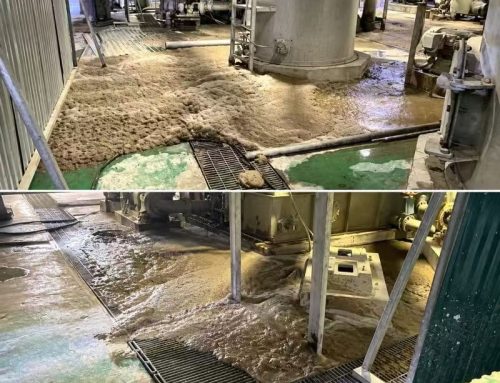
Where black-liquor foam disrupts the process
| Observed condition | Variables to record | Useful test | Acceptance checks |
|---|---|---|---|
| Foam in washer vat, seal tank or filtrate tank | Washer stage, liquor source, temperature, pH, solids/density, recirculation and level | Current-liquor cylinder test followed by a circulation-loop comparison | Foam level, persistence, filtrate stability and washer capacity |
| Reduced mat drainage or washing instability | Stock consistency, shower flow, dilution factor, entrained air and furnish | Compare baseline and treated stock under representative shear | Drainage/mat behavior, filtrate clarity, washing indicators and chemical use |
| Pump cavitation, level swings or air entrainment | Addition point, mixing energy, distance to pump, flow and residence time | Step trial at one feed point and dose at a time | Pump stability, tank level, air content and minimum effective active dosage |
| Foam or entrainment near evaporation | Liquor solids, temperature, viscosity, evaporation stage and carryover limit | Separate evaporator-relevant screening; do not extrapolate from a washer jar test | Persistence, entrainment/carryover, deposits, heat-transfer cleanliness and recovery constraints |
Why a static jar result may not transfer to the mill
Liquor composition changes
Dissolved lignin, soaps, extractives, residual cooking chemicals, wood furnish and solids change the foam system and the way a formulation disperses.
Air and shear are continuous
Pumps, screens, showers, level changes and liquor recirculation can rebuild foam after an impressive initial collapse.
Residence time matters
A product may be consumed, separated or carried to a different stage before it reaches the main foam-generation point.
Downstream effects matter
Deposit tendency, washer cleanliness, pulp carryover and recovery-area constraints can reject a grade that looks strong in a short foam test.
A practical black-liquor trial sequence
- Collect representative liquor from each stage being considered and document the operating range rather than one nominal number.
- Normalize candidates by active material where product solids differ.
- Measure initial foam collapse, rebuild and persistence after representative mixing or recirculation.
- Run a controlled feed-point trial while holding production conditions as steady as practical.
- Approve the program only after reviewing drainage, filtrate level, pump behavior, deposits, carryover and downstream recovery observations.
Commercial selection versus technical diagnosis
This page is the operating guide. For INVINO-6830 and INVINO-6930 screening, product documents and sample options, use the pulp washing defoamer supplier page. For the wider mill portfolio, see the pulp and paper industry center. For wet-end air and white-water foam, use the papermaking defoamer page; for test transfer at high machine speed, see dynamic defoaming.
Black liquor foam-control FAQ
Q: What causes black liquor to foam during kraft pulp washing?
A: Foam is influenced by dissolved lignin, soaps and extractives, entrained air, dilution, temperature, liquor solids, wood furnish, shear and recirculation. The dominant cause can change by washer stage and operating condition, so diagnosis should use current mill liquor rather than a single generic threshold.
Q: Is pH 12.5 or 90°C a universal condition for selecting a black liquor defoamer?
A: No. Those values may occur in some trials or mills, but they are not universal specifications. Record the actual pH, temperature, solids, liquor source and residence time at each candidate addition point, then reproduce the relevant range in screening tests.
Q: Why can a defoamer work in a jar test but fail on a washer?
A: A jar test may not reproduce continuous air entrainment, shear, liquor recirculation, stock fibers, changing solids or the residence time between feed and foam generation. A circulation-loop or staged mill trial is more representative when static screening results do not transfer.
Q: Can black liquor defoamer performance be judged only by foam collapse?
A: No. Foam collapse is only one measure. Also check persistence, drainage or mat behavior, filtrate-tank level, pump stability, deposits, liquor carryover, washer cleanliness and downstream recovery effects.
Q: How should dosing points be compared in a mill trial?
A: Hold production conditions as steady as practical, change one addition point or dose at a time, normalize results to active material and allow enough residence time before judging. Compare washer, filtrate-tank, liquor-line or spray locations only where safe and compatible with mill procedures.
Technical references
- Valmet: Common pulp washing fundamentals
- US9371613B1: Brownstock washing defoamer test and dispersion examples
- US9675905B2: Pulp-washing defoamer performance and carryover considerations
Prepare a mill-relevant screening brief
Provide the washer or evaporation stage, liquor source, furnish, operating range, foam symptom, current feed point and downstream restrictions. This information supports a defensible test plan; it does not replace mill approval or current TDS/SDS review.