Dynamic Defoamer Testing for High-Speed Paper Machines
Direct Answer
Use static foam tests for early screening, then use a dynamic loop or pilot test to reproduce continuous air input, recirculation, shear and residence time. Rank candidates by foam rebuild and entrained-air control together with drainage, retention, deposits, formation and sheet quality; confirm the lowest effective active dosage at the actual machine addition point.
Last updated: August 2026
High-speed paper machines can amplify air entrainment and recirculation effects, but machine speed alone does not determine the required defoamer chemistry. Furnish, white-water closure, pumps, screens, temperature, dissolved and colloidal substances, wet-end additives and the addition point must be included in the test design.
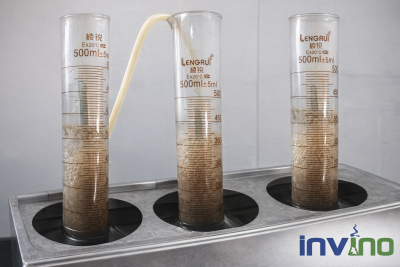
This guide explains how to move from a simple static screen to a dynamic-loop comparison and a controlled machine trial without treating one metric or one speed threshold as universal.
Why dynamic testing matters
A cylinder or shake test is useful for eliminating weak candidates, but it cannot represent continuous air ingress, stock recirculation, pump shear or chemical cycling. A defensible program uses a test ladder: static screening, dynamic-loop ranking and a controlled machine trial.
| Test stage | What to reproduce | What to measure | Decision |
|---|---|---|---|
| Static screening | Current white water or stock, temperature, pH, conductivity and additives | Initial foam collapse, decay and visual dispersion | Reject weak or incompatible candidates; do not set a mill dose. |
| Dynamic loop | Continuous air input, pump or mixer shear, circulation and representative residence time | Foam rebuild, entrained-air/gas content, persistence and dose response | Rank candidates and define starting active-dose steps. |
| Process-impact check | Furnish, fines, fillers, retention/drainage program and contamination | Drainage, retention, formation, deposits, felt/wire cleanliness and sheet defects | Reject a strong foam result if runnability or quality deteriorates. |
| Controlled machine trial | Actual addition point, flow, system volume, grade and production window | Air/foam trend, breaks, quality indicators, chemical demand and minimum effective dose | Approve only within the tested operating range and current product documents. |
Build a representative test, not a dramatic demo
Map air generation
Check pumps, screens, showers, seal pits, wire pits and return loops. Visible surface foam and entrained micro-air may have different sources and measurements.
Normalize active material
Commercial products may have different solids. Compare both product dose and active dose so an apparently strong concentrate is not mistaken for superior chemistry.
Record the wet-end state
Furnish, temperature, pH, conductivity, dissolved and colloidal substances, fillers, retention aid and white-water closure can change the ranking.
Allow transport time
After a dose or feed-point change, wait for the new condition to reach the sampling point and recirculating loop before judging the trend.
How to use the results
- Use static testing to remove clearly weak or unstable candidates.
- Use dynamic testing to compare rebuild and entrained air under repeated shear.
- Review drainage, retention, deposits and sheet quality alongside foam data.
- Run one change at a time on the machine and determine the lowest effective active dosage.
- Requalify when furnish, production grade, water closure or the wet-end program changes materially.
Related paper-mill selection paths
Use the white-water and wet-end commercial page for product screening, the silicone vs fatty-alcohol comparison for chemistry selection, the pulp and paper industry center for the full mill portfolio, and the paper-coating page for coating-color and surface-sizing trials.
Dynamic defoamer testing FAQ
Q: What is the difference between a static and dynamic defoamer test?
A: A static test measures initial foam collapse and decay in a mostly fixed liquid. A dynamic test continually introduces air, mixing or circulation so the system can rebuild foam and entrained air. Use static testing for early screening and dynamic testing when pump shear, recirculation or machine conditions influence performance.
Q: Which measurements should be included in a paper-machine defoamer trial?
A: Measure foam height or volume and rebuild, entrained-air or gas content where available, drainage, retention, formation, sheet defects, felt or wire cleanliness, deposit observations and active dosage. Record furnish, temperature, pH, conductivity, additives, flow and addition point so results can be reproduced.
Q: Does a faster paper machine automatically need a different defoamer chemistry?
A: No. Machine speed is one variable among furnish, white-water closure, air ingress, shear, temperature, dissolved and colloidal substances and the wet-end program. Diagnose the source and compare candidate chemistries under representative conditions rather than selecting from speed alone.
Q: Can a dynamic loop test predict the final mill dose?
A: It can improve screening, but it does not fully reproduce every stock circuit and residence time. Use loop results to rank candidates and starting doses, then determine the lowest effective active dosage through a controlled machine trial.
Q: How long should a mill wait before judging a dose change?
A: Wait long enough for the new dose to travel from the feed point to the measurement location and for the recirculating system to approach a new condition. The required time depends on system volume, flow and retention; document it rather than applying one universal interval.