Esterified Polyether Defoamers: Selection & Application Guide
Direct Answer
Esterified polyether defoamers combine rapid foam knockdown with good compatibility and are often selected for high-temperature, high-shear, strongly alkaline or formulation-sensitive systems. Selection should be based on medium polarity, temperature, pH, shear, required persistence and surface-defect tolerance. Screen several grades at low dosage and confirm both foam control and final-product appearance under real process conditions.
Last updated: August 20, 2026
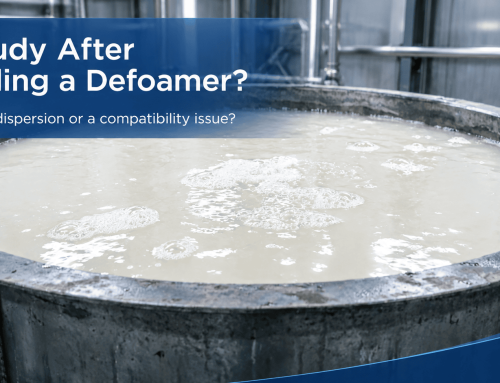
Foam behavior can change when temperature, shear, alkalinity and surface-active ingredients vary. Esterified polyether defoamers are one chemistry option for fermentation, papermaking, coatings, construction materials and water treatment, but the final grade should be selected through compatibility and process-condition testing.
Why do industry veterans rely on Esterified Polyether Defoamers? It’s not just because they are polyethers. It’s because these molecules act as a “Performance Balance Point,” capable of being engineered to survive the most demanding industrial environments.
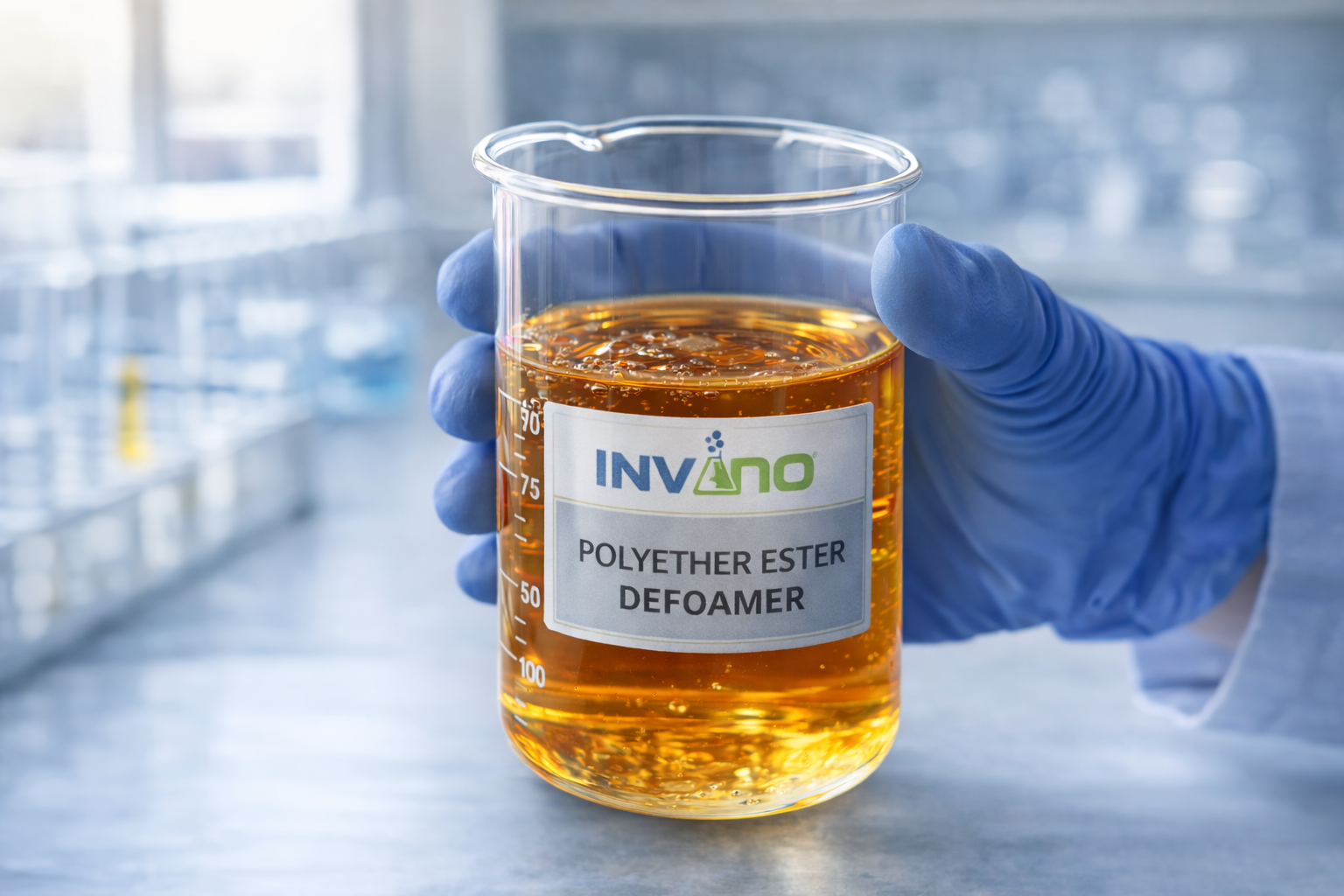
Why Choose INVINO Esterified Polyether Defoamers?
1. Precision Molecular Engineering
The secret to esterified polyether defoamers lies in their structural tunability. Unlike universal defoamers, our molecules act as a two-part system:
-
The Polyether Backbone: Supports low viscosity and dispersion. Compatibility with coatings, fibers or finished surfaces should still be checked for residue, craters or other appearance changes.
-
The Ester “Tuning Switch”: Adjusting the ester linkage changes the Hydrophilic-Lipophilic Balance (HLB), which can influence dispersion, persistence and compatibility.
- For aqueous systems: Hydrophilicity can be adjusted to support dispersion and foam knockdown; verify response at the operating temperature and shear.
- For non-aqueous or complex solvent systems: We tune the ester group to maintain structural stability, preventing premature phase separation.
2. The INVINO Solution Series: Precision Performance
At INVINO, we don’t believe in “one-size-fits-all.” We have engineered our esterified polyether series to address specific industrial pain points:
| Product Model | Selection Characteristics | Applications to Screen |
|---|---|---|
| INVINO-4000A | Cost-focused aqueous-process option; verify dispersion and persistence | Water treatment and sugar refining |
| INVINO-4000B | Aqueous-process option for comparative screening under actual water chemistry | Water treatment and sugar refining |
| INVINO-8081 | Polyether-ester grade retained for non-paper applications; confirm fit by current TDS and process trials | Fermentation and sugar processing; not recommended for papermaking applications |
| INVINO-8082 | Esterified polyether grade; assess compatibility, foam knockdown and persistence | Fermentation, paper wet end and construction materials |
| INVINO-8082A | Esterified polyether variant for application-specific comparison | Fermentation, paper wet end and industrial process systems |
Application fit and dosage depend on formulation, temperature, pH, shear and downstream quality requirements. Confirm by laboratory screening and controlled plant trials.
3. Solving Industry-Specific Challenges
-
Water Treatment & Sugar Refining (INVINO-4000 Series): For high-volume aqueous processes, compare dispersion, foam knockdown, persistence and total use cost. Screen 4000A and 4000B under representative water chemistry, temperature and circulation conditions before setting dosage.
-
Fermentation, Paper Wet End & Construction (INVINO-8000 Series): When dealing with sensitive processes, performance must be specialized.
-
Fermentation: INVINO-8081, INVINO-8082 and INVINO-8082A may be screened where an esterified polyether profile is suitable. INVINO-8081 remains a regular grade for non-paper applications; confirm microbial response, downstream separation, applicable compliance documents and product purity requirements in the actual process.
-
Paper Wet End: INVINO-8082 and INVINO-8082A belong to the esterified polyether class. Compare foam control, drainage, deposit tendency, retention-aid interaction and finished-sheet appearance in white-water or furnish trials before scale-up.
-
Construction Materials: The 8000 series can be screened for air control in cementitious systems. Validate density, entrained-air level, workability and strength development with the target formulation.
-
4. The “No-Guesswork” Approach to Selection
Many procurement managers ask me, “Which defoamer is the best?” My answer is always the same: The best defoamer is the one that fits your system’s chemistry.
Before you request a quote, consider these three variables:
-
Operating Temperature: Is there a sterilization or high-heat phase?
-
Media Composition: Is your system water-based, oil-based, or an emulsion?
-
The “Breaking” Point: Are you struggling with instant foam knock-down or long-term suppression?
Frequently Asked Questions
Build a Trial Plan Around Your Process
Esterified polyether defoamers can provide a useful balance of foam control and compatibility, but grade selection depends on the complete system. Share the medium, temperature, pH, shear, current dosage and downstream quality limits so the INVINO technical team can recommend a short list for laboratory screening and a controlled plant trial.
Request Technical Consultation & Samples