How to distinguish the foam from wastewater treatment aeration tank, and How to remove foam accordingly?

Before diagnosing the specific foam type, if you’re looking for our complete range of high-performance wastewater treatment defoamers, please visit our main industry page.”

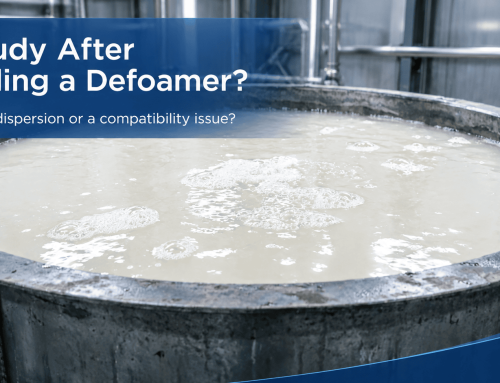
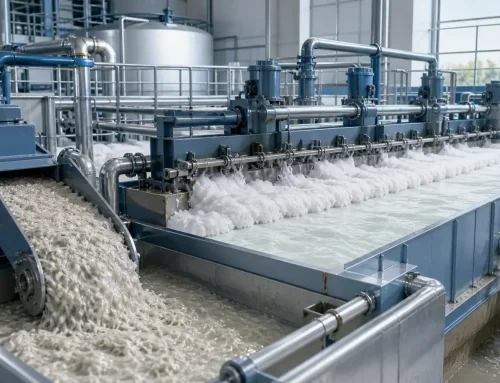
Nowadays, the wastewater treatment technology of activated sludge method is deeply loved by urban wastewater treatment  plants. And the aeration tank is a key part of the sewage treatment of activated sludge method. But there is a common problem in the aeration tank – surface Covered by a lot of foam. The foam inside is generally divided into chemical foams and biological foams, which can cause oxygen to fail to be delivered in time, greatly reducing the oxygenation capacity. Not only will it cause adverse effects on microorganisms, but if it is serious. It will lead to poor quality of water and even cause the system to collapse.

Then how to do?

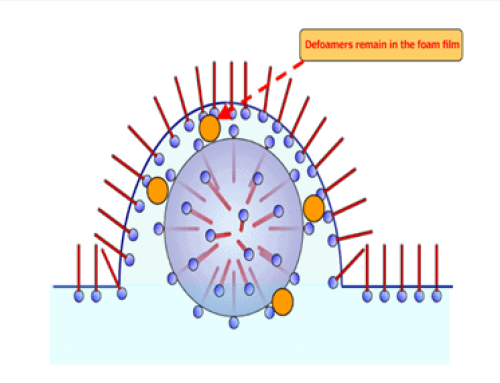
Adding appropriate amount of defoamer into the aeration tank in the treatment processing. The defoamer has alkali and acid resistance, fast defoaming, long-lasting foaming, high efficiency, and non-toxicity. No corrosion, no impact on the microbial growth of the aeration tank, low COD, low consumption, environmentally friendly and so on.

Aeration tank foam is one of the most important parts of daily operation. Different colors of foam indicate different growth states of activated sludge. Today we will talk in detail about the four most common types of foam that run daily.

The better classification of biochemical system foams is by color and viscosity. Because confirming the different colors and viscosities of the foam can guide us to determine the current state of the activated sludge. The guiding significance of foam color and common activated sludge operation failure is as follows.

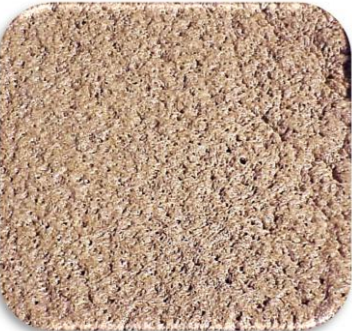
Brownish yellow foam of wastewater treatment

Symptom:

When the foam is produced, the amount is small. The liquid surface around the aeration group is generated in a small amount, gradually dissipates along the radiation direction, and accumulates when it reaches the surrounding corners. The color of the foam is brownish yellow, and the foam color is the same as the activated sludge at that time. During the formation of the entire foam to the accumulation process, the foam is in a fragile state, so that such a foam does not undergo a serious accumulation in a short time and causes a large amount of dross to be produced. such conditions create challenges for the activated sludge. For targeted solutions designed specifically for biological sewage treatment systems, INVINO offers specialized defoamers.”

defoamer for waste water treatment
Discuss Your Foaming Challenge with an Expert

Cause Analysis:

The activated sludge is in an aging state, and some of the activated sludge is disintegrated due to aging. Suspended in the activated sludge mixture, and uniformly attached to the foam under aeration, resulting in prolonged foam rupture. Which creates conditions for foam accumulation. .

Process judgment:

Such foam production is an indication of the aging of the sludge at or about to enter the activated sludge.

Aspect ratio of activated sludge.

The observation of the sedimentation ratio of activated sludge is one of the important methods to judge whether the activated sludge is aging. Whether the sedimentation ratio is too small, whether the settled activated sludge is dark or yellow, and whether the sedimentation speed is too fast, the binding liquid The brownish yellow foam produced on the surface can accurately determine whether the activated sludge is aging.

SVI value.

The SVI value is used to judge the degree of looseness of the activated sludge, which is a good indicator. However, it also has the function of judging whether the activated sludge is aged or not. When the SVI value is lower than 40, the activated sludge usually ages, and the brownish yellow foam produced by the liquid surface can accurately determine whether the activated sludge is aging.

Microscopic observation results.

For aged activated sludge, microscopic observation can also be well discovered. The focus is on the density of the micelles and the proportion of the metazoan. If the observed micelles are dense and there are a large number of metazoans, combined with the brownish yellow foam of the liquid surface, it can be judged whether the activated sludge is in the aging stage.

INVINO provides customers with different product options. For the above foam problem,  INVINO-5023 has good continuous foam inhibition, can quickly penetrate into the liquid, and quickly Spreading out, eliminating intractable foam, stable defoaming under strong alkali and high temperature, and does not affect the basic properties of the foaming system, especially for various fungi in water, no side effects, no damage to the membrane.

  • Microscopic observation results.

For aged activated sludge, microscopic observation can also be well discovered. The focus is on the density of the micelles and the proportion of the metazoan. If the observed micelles are dense and there are a large number of metazoans, combined with the brownish yellow foam of the liquid surface, it can be judged whether the activated sludge is in the aging stage.

Invino provides customers with different product options. For the above foam problem,Invino-620s has good continuous foam inhibition, can quickly penetrate into the liquid, and quickly Spreading out, eliminating intractable foam, stable defoaming under strong alkali and high temperature, and does not affect the basic properties of the foaming system, especially for various fungi in water, no side effects, no damage to the membrane.

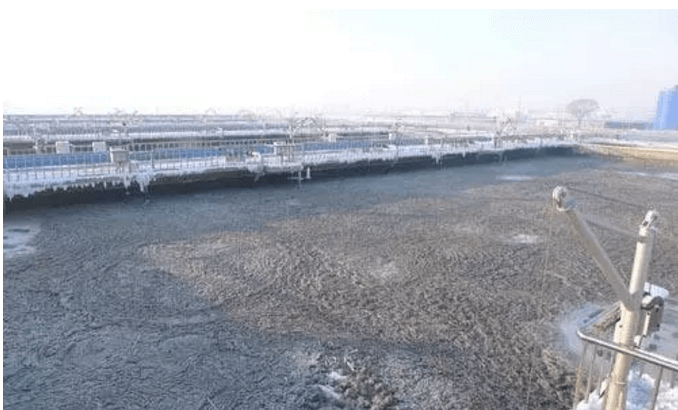
Gray-black foam

waste water treatment
Symptom:

The amount of foam, the production process, the accumulation, the friability and the brownish yellow foam have the same characteristics, but the color of the foam has a black component, and the accumulated product is also grayish black. The color of the activated sludge of the entire biochemical system is also slightly grayish. Black feeling.

Cause Analysis:

The activated sludge is in anoxic state, and the state of anoxic can cause local anaerobic reaction of the activated sludge. So that the activated sludge originally in aerobic state will die during the transformation. And it will also attached to the bubbles during aeration. Therefore, if we see that the resulting foam is grayish black, in addition to confirming whether the influent contains black dye wastewater. It is mainly to confirm whether the biochemical pool is partially anaerobic due to insufficient aeration.

Process judgment:

Most of the gray-black foam is anoxic or anaerobic in the activated sludge system, and the confirmation of the corresponding process control indicators needs to be carried out around this aspect. When the gray-black foam is generated, it is important to make a comprehensive judgment on the DO value.

To confirm whether the activated sludge system is in anoxic and anaerobic conditions, the best method is to perform on-site detection directly through a dissolved oxygen meter. The error that our operators are prone to is to detect only one point to determine the overall dissolution of the biochemical system. Oxygen status, this approach is one-sided. In order to avoid this situation, it is necessary to carry out on-the-spot detection of the uniform distribution of the entire biochemical system, in order to find a partial lack of oxygen supply. If dissolved oxygen is monitored below 0.5 ppm in some locations, we need to focus on confirming these locations.

White foam of wastewater treatment

waste water treatment defoamers

Symptom:

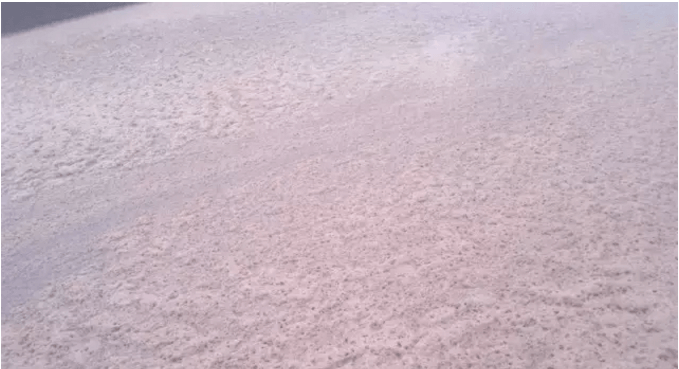
There are many reasons for white foam, but they are mainly caused by excessive load, excessive aeration, and detergent inflow. The viscosity of the foam gives us a lot of reference when it comes to the white foam that is caused by the difference. Under normal circumstances, the viscous foam is not easy to be broken.

It is common in the activated sludge load is too high, and the foam color is white and the accumulation is good at this time. And the viscous and easily broken foam is common in the excessive aeration of the activated sludge. And the foam color at this time is old white, the accumulation is poor, only local accumulation will occur, and the white foam will also occur in the inflow of the detergent. Because the presence of the detergent increases the surface tension of the water body, and finally leads to the formation of foam. .

Process judgment:

The generation of white foam basically comes down to the situation that the activated sludge load is too high, the aeration is excessive, and the detergent flows in.

Relationship between F/M value and white foam. We know that the index for judging the activated sludge load is F/M (ie, food micro ratio). If the F/M value is too high (greater than 0.5) and correspondingly produces a large amount of white viscous foam, we can think that the activated sludge is indeed It is in a state of high load operation.

  • The relationship between the DO value and the white foam. Excessive aeration will also produce a large amount of white foam. Although the normal aeration will not cause biochemical system foam when the foam viscosity is not high, the activated sludge will be partially active under the action of excessive aeration. The sludge will dissolve and dissolve, which will lead to an increase in the organic content of the activated sludge supernatant, which is one cause of foam generation under high aeration conditions.
  • To this end, in the case of ensuring oxygen supply to the activated sludge, minimizing the amount of aeration can not only reduce the generation of foam, but also reduce energy consumption and reduce operating costs. Generally, the DO value of the aeration tank outlet is controlled to be 1-3 mg/l. If the aeration rate is increased to increase the DO to 5.0 mg/l, the negative impact on the activated sludge system is large.
  • The problem of inflow of foaming substances. In addition to excessive treatment load and excessive aeration, the influx of foaming substances into the biochemical system can also cause foaming in the activated sludge system. It is more common in the biochemical system to flow into detergents or surfactants. Under aeration, it is very A lot of white foam will be produced soon. By monitoring the DO value and the sludge load at the time of the biochemical system, we can in turn conclude that the influence of the influent water quality leads to the generation of foam in the activated sludge system.

Color Foam of wastewater treatment

defoamer for waste water treatment
Symptom:
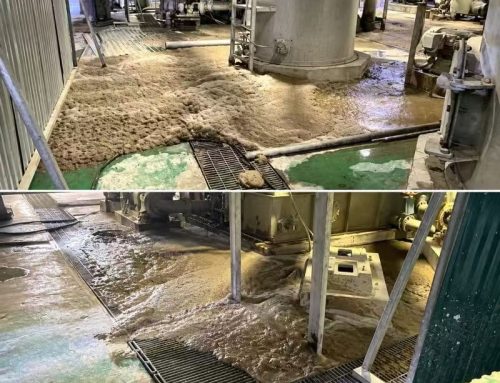
  1. Colored foams often occur in biochemical systems that flow into colored wastewater. Usually, these colored wastewaters have a high concentration of organic matter, which, under the action of aeration, tends to cause foams similar to those generated at high loads. Since the water itself is colored, the naturally occurring foam is also colored.
  2. In another case, sewage or wastewater is rich in surfactants or detergents. When it flows into the biochemical system, it will naturally cause foam. Under the sunlight, the surface of these foams will produce colorful colors. The cause of this is very helpful.
Process judgment:

The generation of colored foam is related to the influx of colored wastewater and the influx of detergents and surfactants. Therefore, it can be judged by observing whether the effluent is still colored by observing the materialized area.

For example, whether some wastewater will cause color interference to the biochemical system. With regard to detergents and surfactants, the focus is also on the accumulation of foam in the location of the materialized zone. From this, the effect of surfactants and detergents on the subsequent biochemical system on the foam was judged.

Identifying the type and cause of foam is the first step. The next is finding the right solution. Explore INVINO’s complete range of defoamers for wastewater treatment or contact our experts today.”

Q&A: Diagnosing & Treating Aeration Foam

Q: How do I distinguish between "Surfactant Foam" and "Biological Foam"?
Look at the color and texture.
1. White, Billowing Foam: This is usually **Surfactant Foam** caused by detergents, under-loading, or start-up conditions. It is light and fragile.
2. Brown, Viscous Scum: This is **Biological Foam**, often caused by Filamentous bacteria (like Nocardia) or old sludge. It is sticky, heavy, and stable.
Q: How to remove light, white foam (Surfactant-based)?
For white foam, you need a defoamer with fast "Knock-down" speed. Our **Silicone-based** or **Fatty Alcohol** series are ideal here. They rapidly reduce the surface tension, bursting the bubbles instantly. Long-term, increasing the Mixed Liquor Suspended Solids (MLSS) concentration often helps naturally absorb the surfactants.
Q: How to handle stubborn, brown biological foam (Nocardia)?
Biological foam is harder to treat. Standard silicones might fail. We recommend our specialized **Polyether** or **Modified Silicone** grades designed to penetrate the viscous sludge cell walls. Combined with operational changes (like reducing Sludge Retention Time/SRT to wash out filaments), this provides the best control.
Q: Will using a defoamer kill the activated sludge bacteria?
No. Our wastewater defoamers are formulated to be **Biologically Inert**. They physically disrupt the foam structure without interfering with the oxygen transfer or the metabolic activity of the aerobic/anaerobic bacteria, ensuring your COD/BOD removal efficiency remains unaffected.
Q: Where is the best place to spray or dose the defoamer?
The ideal dosing point is where the turbulence is highest, typically at the **inlet of the aeration basin** or directly onto the foam surface via spray nozzles. This ensures maximum dispersion. For biological foam, dosing at the return sludge line (RAS) can also be effective to target the filaments directly.


    Request Your Defoamer Solution


    Fill in the form below and our team will recommend the most suitable foam control solution
    for your chemical production.