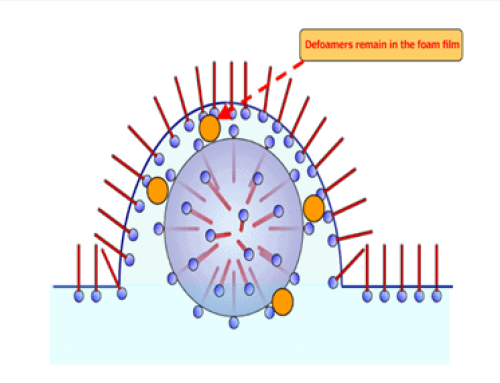
Direct Answer
Pinholes and microfoam in high-viscosity coatings, adhesives or inks usually persist because trapped air cannot rise and escape before film formation. Use a deaerator with strong air-release activity and sufficient compatibility, add it at a stage that provides adequate shear and residence time, then validate with density, drawdown and application tests. Excess dosage can cause craters, loss of gloss or intercoat problems, so optimize by stepwise trials.
Last updated: August 13, 2026
Deaerator for Coatings: The Ultimate Guide to Eliminating Pinholes & Micro-Foam
Summary: Standard defoamers often fail to remove entrained air. This guide explains why you need a specialized Deaerator for coatings to prevent pinholes and how to choose the right chemistry for your formulation.
1. Defoamer vs. Deaerator for Coatings: What’s the Difference?
To eliminate surface defects, engineers must distinguish between surface foam and entrained air. A standard defoamer is different from a deaerator for coatings:
Macro-foam (Surface Only)
Large bubbles at the surface. These are easily broken by standard antifoams.
Micro-foam (Requires Deaerator)
The Pinhole Creator. Finely dispersed air trapped inside the liquid. You must use a Deaerator for coatings to solve this.
In high-viscosity applications (like Epoxies or UV Inks), standard defoamers fail. This is why a specialized Deaerator for coatings is essential to prevent pinholes, craters, and haze.
2. Why You Need a Deaerator for Coatings (The Physics of Stokes’ Law)
Why do pinholes appear? According to Stokes’ Law, bubble rise velocity is crucial:
V ∝ r² / η
⚠ The Engineering Challenge:
In high-viscosity systems, bubbles are “locked” inside. Without a deaerator for coatings, the air cannot escape before the film dries, resulting in permanent pinholes.
3. How a Deaerator for Coatings Works (Coalescence Mechanism)
A Deaerator for coatings uses a mechanism called Coalescence to remove entrained air:
- Step 1: The deaerator for coatings enters the liquid and merges small bubbles.
- Step 2: Bubbles become larger (radius increases).
- Step 3: Buoyancy increases exponentially, allowing air to escape rapidly.
4. Selection Guide: Choosing the Best Deaerator for Coatings
To stop pinholes, you must select the correct chemistry. Here is how to choose a deaerator for coatings based on your system: