Acrylate Defoamer Guide: Foam Control in Esterification Processes
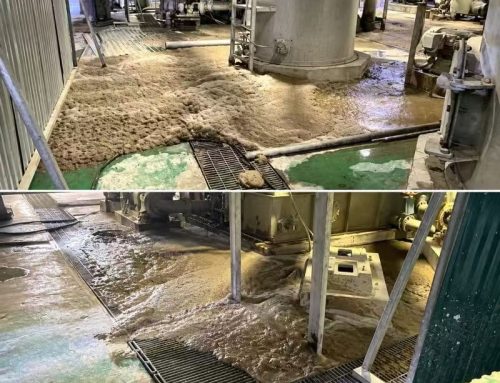
In acrylate monomer production — especially butyl acrylate, methyl acrylate, and other esters — foam is a persistent challenge that affects product quality, process stability, and plant efficiency. The esterification process is highly exothermic, solvent-rich, and acidic, all of which drive excessive foaming. Selecting the right acrylate defoamer is essential for smooth operation and meeting stringent product specs.
This guide covers foam issues in acrylate esterification, the requirements for a suitable acrylate defoamer, and our recommended solution for these demanding conditions.

Why Acrylate Production Needs a Specialized Defoamer
Unlike simple water-based systems, acrylate esterification involves multiple foam-inducing conditions:
- High reaction temperature (120–150°C);
- Strong acids like sulfuric or p-toluenesulfonic acid as catalysts (pH < 2);
- Highly volatile reactants such as alcohols and acrylic acid;
- Intense agitation in reactors and continuous reflux streams;
- Organic solvents and impurities that stabilize foam.
These conditions need a defoamer that breaks foam fast and resists degradation under harsh thermal and chemical environments. A standard silicone or mineral-oil defoamer often fails here.
Foam Formation in Acrylate Esterification: Key Causes
- Heat-induced vapor entrainment: the exothermic reaction vaporizes low-boiling compounds that carry foam into condensers and overhead lines.
- Surface-active by-products: impurities or incomplete reaction components act as surfactants, stabilizing the foam layer.
- Neutralization-stage foaming: after esterification, acids are neutralized with alkali, generating gas and excessive foam.
- Mechanical agitation: high-shear mixing in reactors and separators introduces air and creates persistent foam.
Performance Requirements for Acrylate Defoamers
| Requirement | Explanation |
|---|---|
| High-temperature resistance | Effective at 120–150°C; stable with no breakdown or vaporization. |
| Acid resistance | Maintains performance in low pH (typically pH < 2). |
| Solvent compatibility | Resists dissolution in acrylic acid, butanol, methanol, etc. |
| Chemical inertness | Does not participate in esterification or degrade into unwanted by-products. |
| Low VOC, low odor | Important for export markets (EU, USA) with environmental regulations. |
Standard mineral-oil defoamers often fail due to poor acid stability and solvent dissolution. For acrylate production, a modified polyether siloxane system is preferred.
How to Select the Right Acrylate Defoamer
- Dual performance — defoaming & antifoaming: it should break foam immediately and suppress foam over time; modified silicone-polyether systems give strong long-term performance.
- Thermal & acidic resistance: stable above 130°C and in acidic pH (1–3) — essential in esterification reactors and downstream units.
- Low dosage, high efficiency: effective at 0.05%–0.2%, reducing cost and avoiding over-addition that affects purity.
- Compatibility with process materials: easily dispersible, non-fouling, and won't interfere with filtration, distillation, or separation.
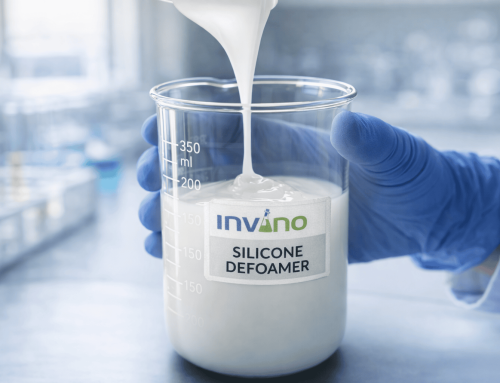
Recommended: INVINO-820 — High-Temperature, Acid-Resistant Acrylate Defoamer
- Composition: modified polyether siloxane
- Key benefits: stable up to 150°C; performs in acidic conditions (pH 1–4); no decomposition or separation
- Use areas: reactor foaming, column bottoms, reflux lines
- Dosage: 0.1%–0.2%
Q&A: Controlling Foam in Acrylate Production
Q: Will the defoamer induce polymerization (popcorn polymer)?
A: No. INVINO-820 is chemically inert in the acrylate system and does not initiate or accelerate popcorn polymerization at normal dosage.
Q: How does it perform in the esterification reactor?
A: It is stable up to 150°C and in strong acid (pH 1–4), giving fast knockdown and lasting suppression without breaking down.
Q: Does it prevent foam "carryover" in the azeotropic distillation column?
A: Yes. By controlling foam at the reactor and column bottoms, it prevents carryover into overhead and reflux lines.
Q: Will it affect the color (APHA) or purity of the final acrylate monomer?
A: No. At 0.1–0.2% dosage it is low-residue and non-fouling, so it does not raise APHA color or reduce purity.
Q: Does it complicate treatment of the esterification wastewater?
A: No. Dosed low and non-fouling, it does not significantly add to downstream wastewater treatment load.