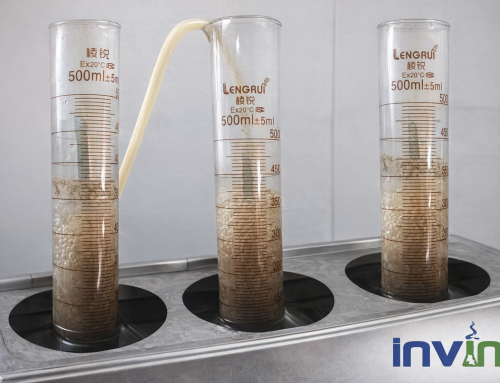
Herbicide Defoamers: Solutions for Weed Control Formulations
Foam generation is a persistent challenge during the manufacturing, packaging, and end-use application of herbicide formulations. Uncontrolled foam can lead to incomplete filling, tank-mix problems, and poor spraying efficiency.
INVINO provides a range of specialized herbicide defoamers designed to tackle foam in various herbicide formulations (like glyphosate, glufosinate, dicamba, etc.), ensuring smooth operations and optimal product performance.

Solving Foam Challenges in Herbicide Formulations
Foam issues with herbicides can occur at multiple stages, each causing distinct problems:
- During Formulation & Packaging: Foam can slow down production lines, lead to incomplete filling of containers, and create handling difficulties. A suitable in-can defoamer prevents these issues.
- During Tank Mixing: Vigorous agitation when mixing herbicides (especially SC formulations or WDG formulations) with water and potentially other adjuvants often generates significant foam in the spray tank. This makes it difficult to gauge the true liquid volume, leading to incorrect concentration and potential spills.
- During Spray Application: Foam in the spray tank can cause pump cavitation, inconsistent spray patterns, reduced sprayer output, and increased drift potential. This results in uneven application and wasted product. Effective herbicide foam control is key here.
INVINO’s Solutions for Herbicide Formulations
INVINO understands the unique challenges of foam control in the agrochemical sector. Our solutions are designed to provide:
- Excellent Compatibility: Our defoamers are compatible with a wide range of active ingredients and adjuvants (e.g., glyphosate, MSO, EC).
- Persistent Foam Control: We offer both in-can defoamers for long-term formulation stability and tank mix defoamers for rapid knockdown during application.
- Reliable Performance: Stability across a wide range of temperatures and pH levels, ensuring your product performs reliably in the field.
Request Your Solution for Herbicide Formulations
Whether you are formulating glyphosate, glufosinate, or complex tank mixes, don’t let foam compromise your product’s performance. Our expert team is ready to provide you with the ideal herbicide defoamer solution.
Contact us today for technical support, product samples, or a quote.
Q&A: Improving Weed Control Efficiency
Q: Can defoamers help reduce "Spray Drift"?
Q: Is it compatible with Glyphosate and Glufosinate solutions?
Q: Does the defoamer affect the wetting and spreading on leaves?
Q: Should I add it during manufacturing or in the spray tank?
1. **In-Can (Formulation):** Added by the manufacturer to prevent foam during bottling and extend shelf life.
2. **Tank-Mix (Adjuvant):** Added by the farmer directly into the spray tank to knock down foam generated by high-pressure agitation or water filling.