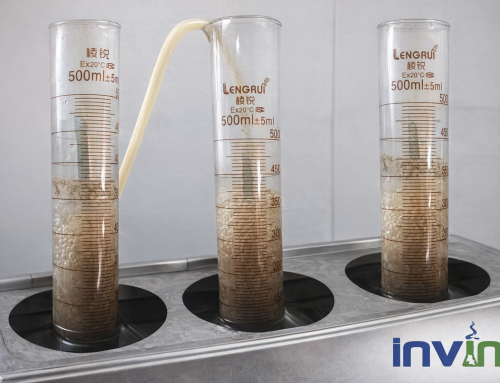
Defoamer for Industrial Circulating Water
In many industrial processes, circulating water is essential for cooling, heating, and various other functions. However, foam buildup within these systems (like cooling towers and closed loops) can become a significant operational headache, reducing heat transfer efficiency, causing pump cavitation, and potentially leading to overflows.
INVINO provides high-performance defoamers for industrial circulating water, specifically designed to control foam in these demanding environments, ensuring system reliability and efficiency.

Benefits of Defoamers in Circulating Water Systems
Using a specialized defoamer (like INVINO-1920) in your circulating water system offers critical advantages:
- Improved Heat Transfer Efficiency: Prevents foam layers that act as insulators on heat exchange surfaces.
- Reduced Water Loss & Chemical Consumption: Minimizes overflows caused by foam, conserving water and treatment chemicals.
- Pump Protection: Prevents pump cavitation caused by entrained air, extending equipment lifespan.
- Enhanced System Reliability: Ensures smooth, uninterrupted operation of cooling towers and other circulating water systems.
- Compatibility: Our defoamers are compatible with common water treatment chemicals (like scale inhibitors and biocides).
INVINO: Your Partner for Circulating Water Foam Control
NVINO offers a range of robust circulating water defoamers, including silicone-based and non-silicone options, suitable for various temperature and pH conditions. Our technical team can help you select the most cost-effective solution for your specific industrial water system.
Request Your Circulating Water Defoamer Solution
Don’t let foam disrupt your industrial processes. Contact INVINO today for expert advice on managing foam in your circulating water systems.
At INVINO, We turn complex Into Simple! Follow the following 3 steps to start today!
Tell Us What You Need
Tell us as specific as possible of your needs, provide the application what you want to use.
Get Solution & Quote
We will work on the best solution according to your requirements, the specific quote will be provided within 24 hours.
Free sample
Free sample is available on your request once you share your specificate.
Q&A: Optimizing Cooling Tower Efficiency
Q: How does foam affect Cooling Tower performance?
1. Pump Cavitation: Foam entering the circulation pump causes air locks and vibration, damaging the impeller.
2. Reduced Cooling: Foam acts as a thermal insulator on heat exchanger surfaces, reducing the heat transfer efficiency.
3. Overflow: Uncontrolled foam blows out of the tower, carrying chemicals into the environment.