Paper Coating Defoamer & Antifoam Supplier | INVINO®
Direct Answer
Choose a paper-coating defoamer by testing it in the complete coating color under representative make-down, circulation, aging and application shear. Compare foam and density recovery together with viscosity, water retention, coat-weight uniformity, blade streaks, pinholes, gloss, printability, deposits and dried-sheet defects. Select the lowest dose that meets the documented acceptance criteria without unacceptable formulation or surface changes.
Last updated: August 2026
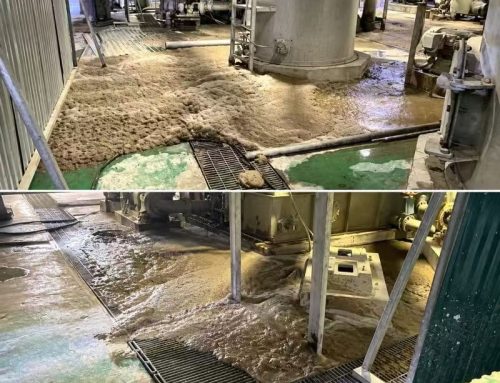
In the paper manufacturing chain, paper coating is a critical process enhancing printability, gloss, smoothness, and barrier functions crucial for packaging, graphic arts, and specialty papers. However, achieving a consistent coated surface can be challenged by foam generated during coating preparation and application. Even small amounts of foam can lead to costly defects like pinholes, fisheyes, and craters, and reduce production efficiency.
Utilizing an effective paper coating defoamer, a key coating additive, is essential. INVINO offers specialized foam control agents engineered for various paper coating systems.

Paper Coating Trial Outcomes to Measure
Use the following indicators to judge whether a candidate adds value under the mill’s actual conditions:
- Coating quality: Compare pinholes, fisheyes, craters, streaks, coat-weight variation, gloss and printability against the baseline; these defects may have causes other than foam.
- Runnability: Record coating skips, web breaks, blade loading, cleaning frequency and deposits before and during the controlled trial.
- Material use: Measure density, overflow, metering stability, coat weight and actual binder or pigment loss instead of assuming savings.
- Compatibility and stability: Verify the exact grade with latex, starch, pigments, CMC, calcium stearate and other additives after circulation and aging.
Paper Coating Grade Shortlist and High-Shear Trial Criteria
Paper Coating Defoamer Selection and Trial Matrix
Direct selection rule: shortlist a chemistry only after identifying where air enters the coating color and whether the dominant problem is surface foam, entrained micro-air, circulation persistence or a dried-sheet defect. Test in the complete formulation under representative make-down, aging, pumping and application shear.
| Coating stage or symptom | First checks | Candidate | Acceptance criteria |
|---|---|---|---|
| Blade, roll or curtain coating color | Mixing sequence, pigment dispersion, latex/starch binder, viscosity, air-entry point | INVINO-3000 hydrocarbon/mineral-oil type or another grade selected from the current TDS | Foam and density recovery, rheology, water retention, coat-weight uniformity, blade streaks, pinholes, gloss and printability |
| Surface sizing or starch system | Starch solids, temperature, recirculation, additives and film uniformity | INVINO-8082 polyether-ester candidate within the current TDS limits | Foam, starch compatibility, deposits, film uniformity, Cobb/sizing result and dried-sheet appearance |
| Persistent micro-air after circulation | High-shear pump, residence time, temperature, viscosity and aging | Compare mineral-oil/hydrocarbon, polyether or compatible silicone-modified candidates rather than choosing by family alone | Immediate knockdown, persistence after circulation and aging, deposit tendency and lowest effective dose |
| Fisheyes, craters, repellency or print defects | Separate air-related defects from contamination, wetting, substrate and incompatibility causes | Re-screen the grade and dosage with the complete coating color | Defect count, surface energy or ink transfer, gloss, printability, microscopy and untreated/control comparison |
Technical references: BASF Etingal S for paper coatings, BASF defoamer compatibility guidance, and BYK paper-coating additive guidance.
Related paper guides: pulp and paper product hub, paper-industry diagnostic guide, white-water and wet-end selector, and black-liquor guide.
Paper Coating Defoamer FAQ
Q: How should a mill choose a defoamer for blade, roll or curtain coating?
Q: Can a paper coating defoamer eliminate fisheyes, pinholes or craters?
Q: Can a defoamer cause repellency spots or poor ink transfer?
Q: Will a defoamer change coating viscosity or water retention?
Q: Is the defoamer compatible with calcium stearate, starch and latex binders?
Request Grade Screening and Sample Options
Share the coating method, formulation, viscosity, temperature, mixing and circulation conditions, current treatment and defect observations to request grade screening, current documents and sample availability.