Global Defoamer Market Trends
Direct Answer: What Is the Global Defoamer Market Trend?
There is no defensible single global market size or CAGR that can be derived from official public sources alone. The most reliable procurement outlook combines end-use production data, application-specific regulation, feedstock and energy conditions, and verified performance in the customer process. Silicone, non-silicone, oil-based, water-based and powder products should be compared by application fit—not by an unsupported universal growth ranking.
Evidence reviewed: 13 August 2026.
The global defoamers market, also encompassing the broader anti foaming agent market, plays a critical, often unseen, role in optimizing efficiency and ensuring product quality across a vast spectrum of industries. From pulp and paper manufacturing and wastewater treatment to paints & coatings and food & beverage production, effective foam control agents are indispensable. As industrial processes become more complex and demands for sustainability increase, understanding the dynamics of the defoamers market, including key segment trends, growth drivers, and future forecasts, is essential for manufacturers, suppliers, and end-users alike. This analysis provides an overview of the current market landscape, dives into critical segments like the silicone defoamer market and non silicone defoamer market, and offers insights from INVINO, a dedicated supplier in this field.
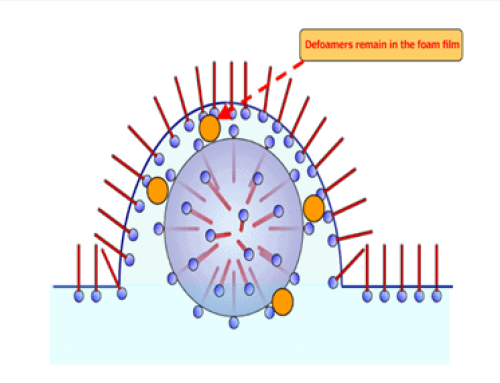
Due to the low content of volatile organic compounds, environmental regulations around the world encourage the use of solvent-free defoamers.
Due to environmental sustainability, the demand for water-based product variants is expected to be higher. Manufacturers are now focusing on research and innovation to develop high-performance organosilicon compounds as raw materials.

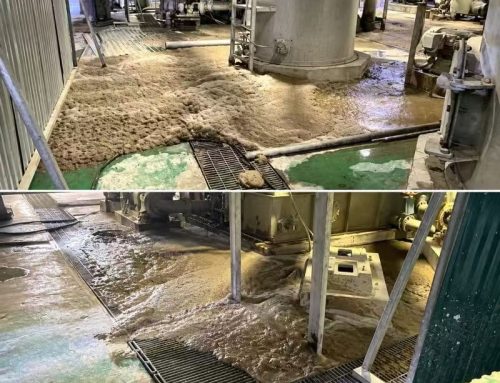
Defoamers are widely used in municipal and industrial wastewater treatment infrastructure to help reduce pump cavitation, prevent losses caused by overflow, and improve hygiene and safety. Therefore, the defoamer optimizes the sludge dewatering process and can promote the clarification, filtration, thickening and flotation process.
Water-based and non-silicone systems are relevant where downstream compatibility, discharge requirements, coating quality or customer specifications limit other chemistries. This is an application-selection trend, not evidence of a universal market growth rate.
Regulatory eligibility is application-specific. For example, U.S. 21 CFR 173.340 lists conditions and limitations for defoaming agents used in food processing. Buyers should verify the intended use, dosage limits, composition, SDS and local requirements rather than infer compliance from a generic market category.
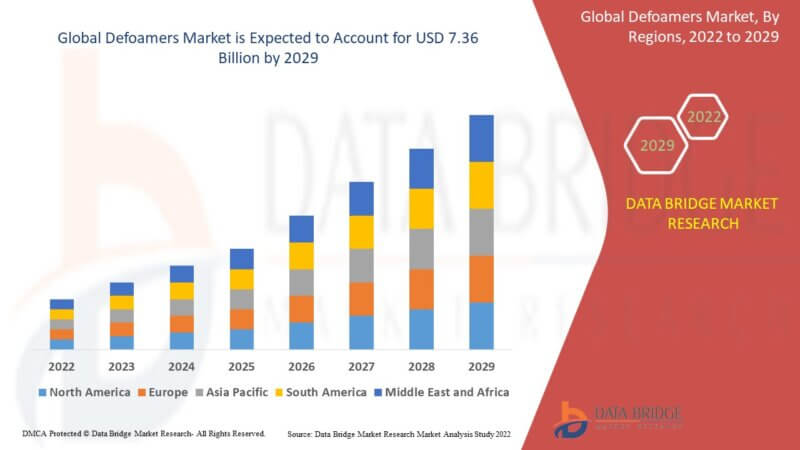
Global Defoamers Market Size & Regional Overview
Foam-control demand follows downstream industrial activity, but there is no single official public dataset that consistently measures defoamer revenue by region. Regional planning should therefore combine supplier evidence with auditable end-use indicators. For pulp and paper, for example, FAO forest-product statistics provide country-level production and trade data.
FAQs: Global Market Insights & Procurement
Q: What are the key factors driving the global defoamers market growth?
Q: Which defoamer type dominates the market: Silicone or Non-Silicone?
Q: How do environmental regulations impact defoamer sourcing?
Q: Why source defoamers from China manufacturers like INVINO?
Q: Can INVINO formulate defoamers for specific regional market needs?
Why Partner with INVINO in this Evolving Market?
As a dedicated manufacturer with strong roots in China, INVINO actively serves the global defoamers market. We don't just follow trends; we help you stay ahead.
Whether you need cost-effective silicone antifoams or eco-friendly non-silicone solutions (like our specialized Polyether series), our focused portfolio caters to key industries including Pulp & Paper, Fermentation, and Coatings.
Looking for market-specific insights or a custom formulation?
Evidence Sources & Method
This page separates audited public indicators from commercial market estimates. It does not publish a global defoamer revenue figure, CAGR or regional share unless the underlying methodology and scope are disclosed.
- eCFR — 21 CFR 173.340, Defoaming agents
- FAO — Forest product production, trade and pulp-and-paper statistics
- EUR-Lex — Commission Decision (EU) 2025/2607, current EU Ecolabel criteria for paints and related products
- U.S. EIA — Short-Term Energy Outlook (an input-cost indicator, not a defoamer price forecast)
Method note: Market direction is presented as a decision framework. Readers should request application test data, SDS/TDS documentation and regulatory declarations for the exact product and use case.