Defoamer for Industrial Circulating Water
← Back to all Water Treatment Applications
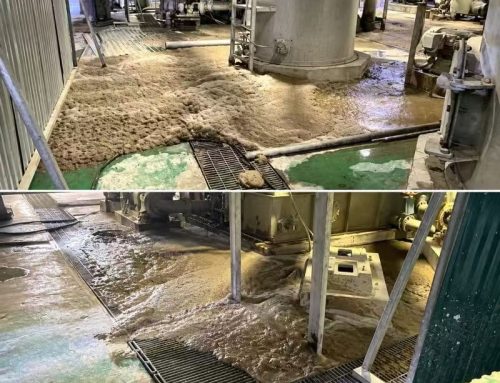
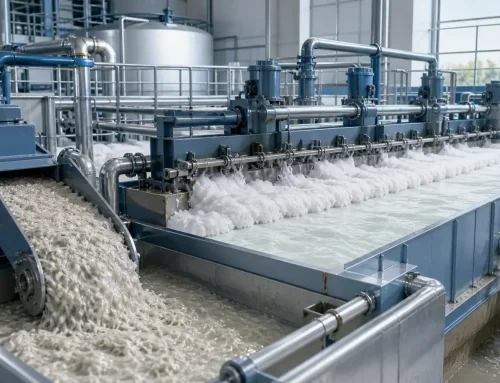
In many industrial processes, circulating water is essential for cooling, heating, and other functions. But foam buildup within these systems — such as cooling towers and closed loops — becomes a serious operational headache, reducing heat-transfer efficiency, causing pump cavitation, and leading to overflows.
INVINO provides high-performance defoamers for industrial circulating water, designed to control foam in these demanding environments and ensure system reliability and efficiency.

Benefits of Defoamers in Circulating Water Systems
Using a specialized defoamer like INVINO-1920 in your circulating water system offers critical advantages:
| Benefit | What It Does |
|---|---|
| Improved Heat Transfer | Prevents foam layers that act as insulators on heat-exchange surfaces. |
| Reduced Water & Chemical Loss | Minimizes foam-driven overflows, conserving water and treatment chemicals. |
| Pump Protection | Prevents pump cavitation caused by entrained air, extending equipment life. |
| Enhanced Reliability | Ensures smooth, uninterrupted operation of cooling towers and loops. |
| Chemical Compatibility | Compatible with scale inhibitors, corrosion inhibitors and biocides. |
INVINO: Your Partner for Circulating Water Foam Control
INVINO offers a range of robust circulating water defoamers, including silicone-based and non-silicone options suitable for various temperature and pH conditions. Our technical team helps you select the most cost-effective solution for your specific industrial water system.
Recommended: INVINO-1920 — Circulating Water & Cooling Tower Defoamer
Engineered for cooling towers and closed-loop circulating water: fast foam knockdown with persistent suppression, stable across temperature and pH, compatible with scale/corrosion inhibitors and biocides, and low-residue to protect heat transfer, pumps, nozzles and filters. For a broader selection guide, see our water treatment defoamer page.
Q&A: Optimizing Cooling Tower Efficiency
Q: How does foam affect cooling tower performance?
A: Foam acts as an insulator on heat-exchange surfaces, reducing heat transfer; it also causes overflows and entrains air that leads to pump cavitation.
Q: Can it control foam caused by biocides and slime stripping?
A: Yes. INVINO-1920 knocks down and suppresses the foam generated during biocide dosing and slime-stripping operations.
Q: Is it compatible with scale and corrosion inhibitors?
A: Yes. It is compatible with scale inhibitors, corrosion inhibitors and biocides without causing precipitation.
Q: Will the defoamer clog spray nozzles or filters?
A: No. At correct dosage it is low-residue and well-dispersed, so it does not clog nozzles or side-stream filters.
Q: What is the best dosing strategy: shock or continuous?
A: Both — continuous low-dose metering keeps the loop foam-free, while shock dosing handles sudden foam from biocide or slime-stripping events. Confirm by trial for your system volume.