Defoamer Performance Testing: Standard Methods and Procedures
Direct Answer
No single antifoam test can identify the best product for every process. Compare initial foam knockdown, suppression over time and compatibility in the actual process liquid at the intended temperature, pH and dosage. Use the same mixing energy and test conditions for every candidate, and confirm the laboratory winner in a small process trial.
Antifoam Test Plan: From Laboratory Screening to Pilot Trial
Use one written test plan for every candidate. Keep the process liquid, temperature, pH, mixing or airflow, vessel geometry, test duration and addition point identical. Include an untreated blank, record dosage both as supplied and on an active-material basis, and repeat the comparison to confirm that the ranking is reproducible.
| Stage | Record | Decision |
|---|---|---|
| 1. Controlled screening | Sample ID, active content, process-liquid batch, temperature, pH, dosage, mixing/airflow, initial and maximum foam height, knockdown time and foam height at fixed intervals. | Select products that keep the liquid foam below the agreed height at the lowest practical active dose, with repeatable results. |
| 2. Compatibility check | Haze, deposits, floating oil, viscosity change, coating defects, filtration behavior or other process-specific side effects. | Reject a strong foam-control result if it creates an unacceptable downstream defect. |
| 3. Pilot confirmation | Real addition point, pump and shear conditions, foam recurrence, consumption over time, product quality and operating stability. | Approve the grade and operating window only after the laboratory ranking is reproduced at small process scale. |
Set the acceptance rule before testing. For example, define the maximum allowed foam height, required suppression time, permitted side effects and target active dosage. Do not select a winner from a single visually impressive result.
Standards context: ASTM D1173 and ISO 696 address foaming properties using Ross–Miles-type measurements. They provide controlled comparison conditions but do not replace a process-specific dynamic or pilot test.
Selecting the right defoamer or antifoam agent is crucial for countless industrial processes. But how do you objectively measure and compare defoaming performance? Reliable foam testing is essential for R&D, quality control, and choosing the most effective product for a specific antifoaming agents application. This guide outlines common defoamer testing procedures used in the lab, from standardized methods like the Ross-Miles foam test to dynamic evaluations, helping you understand foam testing methods and interpret results. INVINO utilizes robust testing protocols to ensure the quality and effectiveness of our antifoam solutions.

Common Foam Testing Methods in the Laboratory
Several standard and modified foam test procedures are employed:
Ross-Miles Foam Tester to Test Antifoam
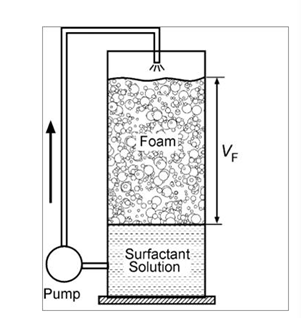
Dynamic Foam Testing (Air Sparging / Drum Test)

Foam Shake Test Method
- Principle: A simple, rapid foam test often used for quick screening or QC checks. It involves shaking a mixture of the foaming liquid and the defoamer/antifoam under standardized conditions.
- Procedure Outline: A defined volume of foaming medium and antifoam agent are placed in a sealed container (e.g., graduated cylinder). The container is shaken vigorously for a set time/number of shakes. Foam height is measured immediately after shaking and/or the time taken for the foam to collapse to a specific level is recorded. This is a common foam test procedure for detergents.
- Relevance: Provides a quick, comparative indication of knockdown efficiency, useful for initial screening or comparing similar defoaming agent examples.

Evaluating Defoaming Performance from Test Results
Simply running a foam test isn’t enough; interpreting the results correctly is key to understanding defoamer performance:
- Time to Reduce Existing Foam: How quickly does the defoamer reduce existing foam? (Relevant in Shake Test, Dynamic Test post-addition).
- Suppression Time / Persistence: How long does the antifoam prevent significant foam re-formation under continuous agitation or sparging? (Key metric in Dynamic Test).
- Maximum Foam Height: What is the highest level the foam reaches before being controlled? (Dynamic Test).
- Liquid Foam Height after Mixing Stops: How quickly does the foam break down after agitation stops? (Shake Test, Ross-Miles). Defines the foam stability test procedure results.
- Dosage Efficiency: Comparing the above metrics at different defoamer concentrations to find the optimal dose.
Additional Factors Influencing Foam Testing Results
Accurate and repeatable foam analysis requires controlling variables:
- Temperature and pH: These significantly impact both the foaming tendency of the liquid and the stability/effectiveness of the antifoam reagent. Tests should be run at relevant process conditions.
- Long-Term Stability (of Defoamer): How long an antifoam remains effective after addition can be tested with prolonged dynamic tests. Some antifoams may lose efficacy over time.
- Compatibility: Interactions between the defoamer and other chemicals (surfactants, electrolytes, polymers) in the system can drastically alter foaming test results. Compatibility testing is crucial.
- Shear / Agitation: The type and intensity of mixing/agitation heavily influence foam generation and defoamer dispersion/stability. Test methods should mimic process shear where possible.
- Dosage & Dispersion: Ensure accurate dosing and adequate dispersion of the antifoam solution into the test medium.
INVINO: Expertise in Defoamer Testing and Solutions
At INVINO, we utilize standardized and customized foam testing methods in our dedicated foam testing laboratory to evaluate and develop high-performance defoamers. We understand the nuances of defoamer testing procedures and help clients select products proven effective for their specific needs.
Prepare Your Antifoam Test Results for Review
For a useful comparison, send the same set of records for each tested product. Include an untreated control and state whether the dose is measured as supplied product or active ingredient.
- Process conditions: application, liquid sample, temperature, pH, vessel size, mixing speed or airflow, and test duration.
- Product and dose: exact grade, active content if known, dilution method, dose basis, and point of addition.
- Measured results: initial and maximum foam height, time to reduce foam, foam height at fixed intervals, repeat-test results, and any compatibility defects.
Photos or a short video can help explain the foam behavior. Label each file with the product, dose and test time so the results can be compared.