NPK Fertilizer Defoamer: Foam Control for Slurry Granulation
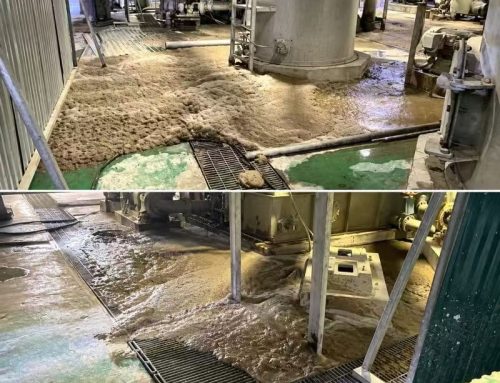
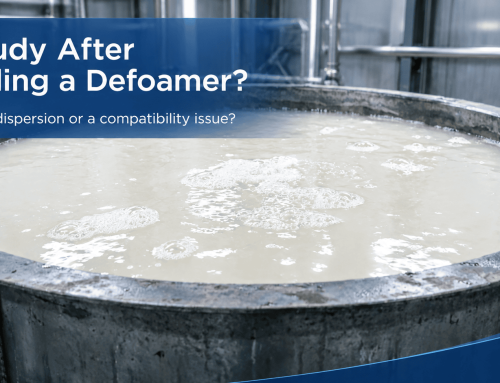
Producing NPK compound fertilizer — combining nitrogen (N), phosphorus (P), and potassium (K) — relies on the slurry granulation process. High-output but foam-prone: without an effective NPK fertilizer defoamer, foam causes equipment blockages, inconsistent granulation, loss of active ingredients, and costly downtime. For the CO₂-absorption (Benfield) side of fertilizer plants, see our Benfield fertilizer defoamer guide.

Foam Generation Stages in NPK Production
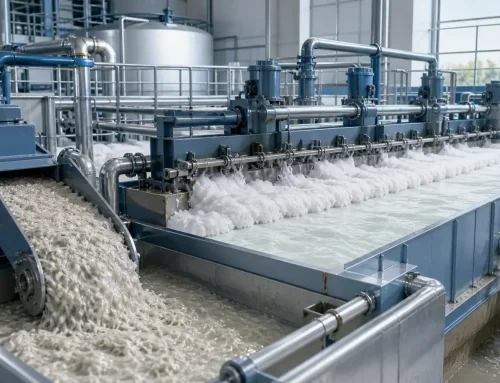
Foam appears at different points in slurry granulation, triggered by chemical reactions or mechanical agitation:
| Stage | Foam Source | Foam Characteristics |
|---|---|---|
| Neutralization | Ammonia reacting with phosphoric acid + CO₂ | Acidic, high-temp, dense & sticky |
| Slurry granulation | High-speed spraying and agitation | Explosive, short-lived |
| Mixing/agitation | Surfactants or impurities in raw materials | Moderate but persistent |
| Drying/cooling | Vapor release with traces of surfactants | Usually negligible |
Stage-by-Stage Defoamer Selection
Neutralization Stage
Conditions: pH < 4, 70–110°C, exothermic. Foam: rapid gas release + thick foam layer.
Recommended: acid- and heat-resistant polyether defoamer. Avoid standard silicone emulsions — they hydrolyze in acid.
Slurry Granulation Stage
Conditions: intense agitation, neutral pH, short residence. Foam: burst foaming at impact zones.
Recommended: fast-acting polyether grade with good dispersibility for instant knockdown.
Mixing & Auxiliary Stages
Conditions: mild agitation, neutral pH. Foam: long-lasting, low-density.
Recommended: polyether defoamer with prolonged suppression for persistent foam.
Recommended: INVINO-G382 — Polyether Defoamer for NPK Granulation
A polyether-based grade matched to NPK production: acid- and heat-resistant for neutralization and granulation, with fast knockdown, good dispersibility, and long-term suppression. Typical: active 20–30%, pH 3–9, 60–110°C, non-reactive, low residue, no oil floating.
Polyether vs. Silicone Defoamer for NPK Plants
| Criteria | Polyether Defoamer | Silicone Defoamer |
|---|---|---|
| Acid resistance | Strong | Weak (unless modified) |
| Thermal stability | High | Very high |
| Long-term suppression | Excellent | Moderate |
| Instant defoaming | Moderate | Excellent |
| Compatibility | High | Risk of oil separation |
| Cost-effectiveness | Balanced | Higher cost |
Best practice: use a polyether defoamer as the main agent through the process, supplemented with silicone-based options at high-foam shock points such as spraying.
FAQ: Optimizing NPK Granulation
Q: Is it effective during the violent acid-ammonia neutralization reaction?
A: Yes. INVINO-G382 is a polyether grade with strong acid and heat resistance, stable through the exothermic neutralization (pH below 4, 70–110°C).
Q: Will eliminating foam improve the hardness of NPK granules?
A: Yes. Removing entrained air gives denser, more consistent slurry, improving granule formation, hardness, and product quality.
Q: Can it handle the impurities in wet-process phosphoric acid?
A: The polyether chemistry tolerates the impurities and acidity of wet-process phosphoric acid feedstock. See our phosphoric acid defoamer page.
Q: Does it prevent pump cavitation in the slurry transfer lines?
A: Yes. By collapsing entrained air in the slurry, it reduces the air pockets that cause pump cavitation.
Q: Is the defoamer safe for agricultural soil application?
A: At process dose it is consumed in production and is non-reactive and low-residue, so it poses no issue for the final fertilizer applied to soil.