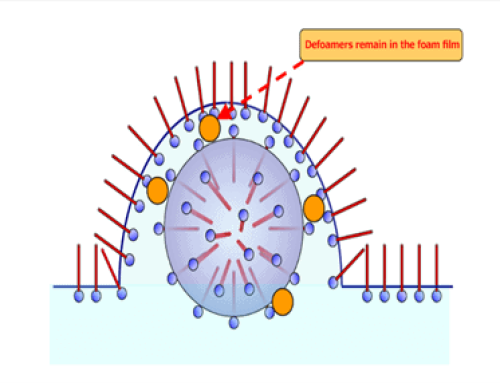
Food Grade Defoamer: Selection & Documentation | INVINO
Foam Control for Food Processing Choose a defoamer for the specific food-processing application and destination market. Review the selected grade’s composition, technical data and applicable compliance documentation, then validate foam control and product quality in your process. Suitability and permitted use conditions must be checked for each grade and application.
Active Ingredients: The Science of Safety
Composition varies by grade. Review the selected product's technical data and applicable food-use documentation for its active ingredients, emulsifiers and intended application.
Process Validation: Assess taste, odor, color and other relevant quality attributes in the intended process at the proposed dose. Validate suitability before production use.
Targeted Applications
Tofu & Soy Products
Crucial for preventing boil-over during soy milk boiling. Ensures smooth texture without residual spots on tofu skin.
Brewing & Fermentation
Controls foam in beer, wine, and yeast fermentation tanks to maximize vessel capacity. (See our Fermentation Page).
Potato & Veg Processing
Used in washing and slicing lines (starch foam control) to prevent water overflows and improve washing efficiency.
Dairy & Beverages
Prevents foaming during filling, pasteurization, and homogenization of milk, whey, and fruit juices.
Looking for Industrial Antifoams?
You are currently viewing our Food Grade solutions. For industrial applications, please select your industry:
💧 [Water Treatment] | 📄 [Pulp & Paper] | 🎨 [Paints & Coatings] 🏗️ [Construction] | 🌾 [Agrochemicals] | 🏭 [View All Industries]
Food Grade Defoamer Selection Matrix
| Chemistry / Type | Target Application | Key Characteristics | Models & Technical Data |
|---|---|---|---|
| Silicone Emulsion | Food Processing & Washing Vegetable washing, beverage bottle cleaning, food plant wastewater treatment. |
Excellent dispersion in aqueous systems. Available in different concentrations for flexible formulation. | INVINO-F380 30% Active Download TDS ⬇ INVINO-210D 20% Active Download TDS ⬇ |
| Silicone Emulsion | Yeast Fermentation Biological fermentation processes. |
Evaluate sterilization stability and yeast performance under the intended process conditions. | INVINO-F3240 40% Active Download TDS ⬇ INVINO-F3230 30% Active Download TDS ⬇ |
| Silicone Emulsion | Starch Processing Starch slurry and extraction. |
Rapid knockdown of starch-stabilized foam. Highly cost-effective. | INVINO-F200 18% Active Download TDS ⬇ |
| Silicone Powder | Dry Food & Powder Blends Solid formulations requiring moisture-free foam control. |
Free-flowing powder for dispersion after water is added. * Equivalent to Xiameter-1920 | INVINO-2101 Download TDS ⬇ |
What are the ingredients of food grade defoamer?

Strict Raw Material Segregation & Traceability The synthesis of food-grade defoamers requires absolute isolation from industrial contaminants. We enforce strict raw material segregation to control heavy metals (such as Lead and Arsenic) and residual monomers.
-
Silicone-Based Systems: We utilize highly purified polydimethylsiloxane (PDMS) combined with food-approved hydrophobic silica and food-safe emulsifiers.
-
Non-Silicone Systems: Formulated using edible vegetable oils, refined white oils, or specialized polyols that meet strict hygiene standards.
Every batch in the INVINO food-grade portfolio is subjected to rigorous QA protocols. We provide complete documentation including Certificate of Analysis (COA), heavy metal test results, and microbiological safety data to support your facility’s quality audits.
How to Establish the Appropriate Dose
There is no single dosage recommendation for every food process or defoamer grade. Start with the selected grade’s technical guidance and confirm the applicable conditions of use for your product and market. Use controlled trials to determine the lowest effective dose within those conditions.
Record whether the dose refers to the supplied defoamer or its active ingredient, and state the basis of calculation. For mass-based units, 1 g/kg equals 1,000 mg/kg (ppm by mass). This conversion is not a recommended use level or a regulatory limit.
| Information needed | What to record |
|---|---|
| Product identification | Exact defoamer grade and current technical data sheet |
| Application | Food category, processing step and destination market |
| Dose basis | Supplied product or active ingredient; mass or volume basis |
| Trial results | Foam control, sensory observations and downstream effects |
| Documentation | Applicable specification, batch information and compliance statement |