Recovered-fiber process support
Deinking Defoamer & Foam Control for Recycled Fiber Mills
Control harmful foam and entrained air without assuming that all flotation froth should disappear. Share your furnish, process stage and operating conditions so INVINO can review candidate and document availability.
Diagnostic boundary
First Decide Which Foam State You Need to Control
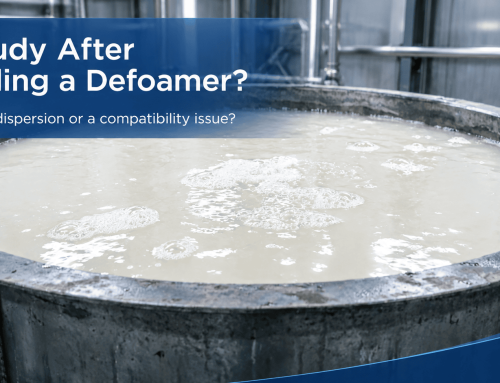
A deinking defoamer should not be selected from surface foam height alone. In flotation deinking, a controlled froth layer carries detached ink particles out of the fiber suspension. The same system may also produce unstable overflow, excess water and fiber carryover, or persistent air farther downstream.
Controlled flotation froth
The flotation cell needs bubbles and a removable froth phase to collect ink. If treatment suppresses this phase too far, ink collection conditions may change. Track the accept and reject streams, not only the appearance of the cell surface.
Harmful overflow and carryover
Foam flooding, unstable tank level, excessive reject volume, or high fiber and water loss calls for a controlled review of surfactant load, air rate, consistency, water chemistry and defoamer response.
Downstream entrained air
Micro-air in a machine chest, approach-flow system or white-water loop is a different trial endpoint. Diagnose drainage, pump or vacuum instability and sheet observations separately. Use the Papermaking Defoamer for White Water & Wet End page for this stage.
Use separate observation points for the flotation surface, reject stream, accept stock and downstream circulation. A lower foam level at one point is not sufficient if the change increases fiber carryover, shifts ink into the accept, or moves the air problem into the paper-machine loop.
Process-stage matrix
Locate the Foam Before Selecting a Defoamer
The same recycled-fiber line can contain several foam-generating zones. Identify the first point where the operating symptom appears, then collect a baseline before changing chemistry or dose.
| Process stage | What the mill may observe | Data to collect before screening | Validation action |
|---|---|---|---|
| Pulper or high-consistency chest | Foam growth after wetting, caustic addition, peroxide chemistry, surfactant addition or mechanical agitation | Furnish mix, ink type, consistency, temperature, pH, water hardness, pulping time and chemical addition sequence | Compare the untreated baseline with controlled additions while holding pulping energy, time and chemistry constant |
| Flotation feed and cell | Unstable froth, cell flooding, level fluctuation, excess reject flow or visible fiber carryover | Feed consistency, air rate, surfactant or collector package, stage retention time, froth removal condition, accept and reject sampling points | Adjust one variable at a time and evaluate both foam behavior and ink/fiber separation endpoints |
| Reject tank, washer or post-flotation chest | Persistent reject foam, poor drainage, tank overflow or foam returning with process water | Reject solids, water flow, washer operation, residual surfactants, dilution water and return-water condition | Determine whether the problem belongs to reject handling, washing, water clarification or flotation chemistry |
| Machine chest, approach flow or white-water loop | Entrained air, pump or vacuum instability, slow drainage, deposits or sheet observations | Stock temperature and pH, dissolved and colloidal load, recycled-water rate, retention and sizing chemistry, current dose and dosing point | Move the diagnosis to wet-end foam and air control; do not copy a flotation-cell dose into the paper-machine loop |
Do not diagnose the cause from foam color or bubble size alone. Record what changed immediately before the problem appeared.
Trial definition
Match the Trial to Furnish and Deinking Route
Flotation, washing and hybrid deinking routes do not create the same foam-control task. Flotation needs a controlled froth phase for ink rejection. Washing depends more heavily on dilution, drainage and removal of dispersed fine material. A hybrid line can move residual surfactants and air from one stage into the next.
-
What recovered fiber enters the line?
Identify office and graphic paper, old newsprint or magazines, old corrugated containers, mixed packaging fiber, broke, or another furnish.
-
Which ink and contaminant load dominates?
Record offset ink, toner, inkjet ink, flexographic ink, adhesives, wax, stickies, ash and filler where known.
-
Which separation route is operating?
Specify flotation, washing, a combined sequence, or process-water clarification. Include the exact stage where harmful foam appears.
-
How closed is the water loop?
Reused process water can carry surfactants, dissolved material, fines and air back into the system.
Do not select chemistry from the furnish name alone. Define the operating window first, then screen the lowest dose that meets the mill’s combined acceptance criteria.
Documented scope
Current INVINO Paper Grades: What the Documents Do and Do Not Prove
The current INVINO paper documents provide a starting pool for laboratory or mill screening. They do not, by themselves, prove suitability for a deinking flotation line. None of the reviewed May 2026 TDS files below explicitly names deinking or flotation.
| Grade | Chemistry | Scope stated in current paper documents | Deinking status | Required next step |
|---|---|---|---|---|
| INVINO-5045 | Fatty-alcohol-based defoamer | Papermaking, white-water circulation, wet-end and high-speed paper-machine systems | The reviewed TDS does not name deinking or flotation | Review furnish and process stage, then run controlled screening |
| INVINO-5060 | Fatty-alcohol-based defoamer | Papermaking, white-water circulation, wet-end and high-speed paper-machine systems | The reviewed TDS does not name deinking or flotation | Compare under the mill’s actual water, surfactant and shear conditions |
| INVINO-5800 | Modified fatty-alcohol antifoam | Papermaking in the TDS; current paper overview places it in wet-end and white-water screening. INVINO positions it as an enhanced-deaeration candidate against conventional fatty-alcohol references | The reviewed TDS does not name deinking or flotation | Confirm whether the target is flotation froth, downstream foam or entrained air before testing |
| INVINO-8062 | Polyether defoamer | Papermaking, white-water circulation, wet-end and high-speed paper-machine systems | The reviewed TDS does not name deinking or flotation | Screen where a polyether candidate fits the process and downstream quality requirements |
This table records document scope. It does not rank the grades for deinking. Tie any test result to the exact grade, sample identification, process conditions and observation date.
Controlled comparison
Run a Balanced Deinking Foam-Control Trial
Judge a deinking defoamer by the whole separation result, not by the fastest surface collapse. A US Forest Service review of flotation deinking describes ink detachment, attachment to air bubbles and froth removal as linked subprocesses. It also explains why froth stability affects ink removal and fiber or water losses.
-
Freeze the baseline
Record furnish, consistency, temperature, pH, hardness, water source, surfactant package, air rate, mixing or pump conditions, current defoamer, dose, dosing point and sampling times. Identify accept and reject sampling points.
-
Screen one change at a time
Keep the process conditions constant while comparing untreated control, current product and candidate grades. Define observation times before the test and use the same schedule for every candidate.
-
Use a balanced scorecard
- Foam or froth height and overflow
- Reject flow, solids, water and fiber loss
- Brightness or ERIC where measured
- Ink specks, stickies and deposits
- Downstream air and drainage
- Finished-sheet observations
-
Confirm on the operating line
Move a candidate to a controlled pilot or mill trial only after defining the pass criteria. Start with a reversible change and maintain a return point. The optimum dose and dosing point must come from the target system.
Repeat the most promising condition before scale-up. Report an inconclusive result as inconclusive rather than averaging away the difference.
Evidence control
Documents, Sample Identification and Review Boundaries
Nanjing Invelychem’s confirmed annual production capacity is 20,000 metric tonnes. Treat this as supply-capacity information, not evidence that a grade fits a deinking process. Each inquiry still requires grade-level and process-level review.
Use the current Pulp and Paper Product Overview to compare documented paper applications. Request the current grade-level TDS and destination-specific SDS through the Technical Document Center.
Check compliance against the named product, document, entity, validity period and destination market. A test or certificate for one submitted sample must not be described as separate testing of INVINO-5030, 5045 and 5060. A COA describes a batch and is not a permanent public specification.
Technical answers
Deinking Defoamer FAQ
Should a defoamer remove all foam from a flotation deinking cell?
No. Flotation uses bubbles and a controlled froth layer to remove detached ink. The treatment goal is to control harmful flooding, unstable froth, excessive carryover or downstream foam without assuming that the ink-collection phase should disappear. Confirm the result with accept and reject measurements.
If the cell surface becomes quieter, confirm that reject flow, reject solids and accepted-stock ink measurements remain within the mill’s limits. A calmer surface is not proof of better deinking.
What information should I send when requesting a recycled paper defoamer?
Send the furnish and main ink type, route, problem stage, consistency, pH, temperature, water-loop condition, current deinking chemistry, current defoamer and dose, dosing point, and observed symptom. State which endpoints the mill can measure, such as reject solids, fiber loss, brightness, ERIC, drainage or entrained air.
Include recent changes in recovered-paper source, ink mix, surfactant package or water reuse. This helps separate a chemistry problem from a new operating load.
Are INVINO-5045, 5060, 5800 and 8062 automatically suitable for deinking?
No. The reviewed TDS files support papermaking, white-water, wet-end or related paper systems but do not identify deinking or flotation. Treat these grades as paper-system screening candidates only after reviewing the target process and completing a controlled comparison.
Ask for the current grade-level TDS before testing. A general paper overview does not replace the boundaries in the current product document.
Where should a deinking defoamer be added?
There is no universal dosing point. First locate the harmful foam or air problem. Candidate points may be evaluated around the pulper, flotation feed, reject handling, post-flotation chest, washer or downstream paper-machine loop, but each point changes dispersion, residence time, shear and interaction with surfactants. Test one point at a time.
Keep the addition method and mixing condition consistent. Record direct use or dilution because preparation and pumping can change dispersion before the target zone.
Which measurements matter besides foam height?
Use the measurements available to your mill. These can include overflow frequency, froth behavior, reject flow and solids, water or fiber carryover, accept and reject brightness or ERIC, deposits and stickies, downstream entrained air, drainage, machine stability and finished-sheet observations. Define the pass criteria before comparing products or doses.
Use the same sampling points and timing for every candidate. Record unavailable measurements instead of replacing them with visual assumptions. The scorecard should show foam control and the separation or paper-machine consequence.
Condition-led review
Share Your Deinking Line Conditions
Send enough process information for a technical review, not only the words “too much foam.”
- Company email and target country
- Furnish and main ink or contaminant type
- Flotation, washing or hybrid route and problem stage
- Consistency, pH and temperature
- Water-loop condition and current deinking chemistry
- Current defoamer, dose, dosing point and observed symptom
- Required TDS, SDS or compliance documents
After submission, the technical team will identify missing information and confirm current document availability. It will either propose candidates for controlled screening or request more data before preparing a shortlist. Results remain subject to testing in the target system.
GA4 event parameters must not include names, email addresses, company names, phone numbers or free-text process details.