Fertilizer Defoamer for Benfield CO₂ Systems: Foam Control in Ammonia & Urea Plants
In modern fertilizer production, ammonia synthesis relies on efficient CO₂ removal. The Benfield system — one of the most widely used CO₂ absorption technologies — is vital to ammonia, methanol, and urea manufacturing. But foaming from contamination, degradation byproducts, and gas impurities is a serious operational threat. A high-performance fertilizer defoamer protects plant reliability, energy efficiency, and product quality. For NPK compound fertilizer production, see our NPK fertilizer defoamer guide.

Foam Formation in the Benfield Process
The Benfield process absorbs CO₂ using hot, alkaline potassium carbonate solution. Efficient, but prone to foaming from:
- Oil-based contaminants in the feed gas
- Catalyst dust and activated carbon fines
- Additive degradation products
- Corrosion-related byproducts
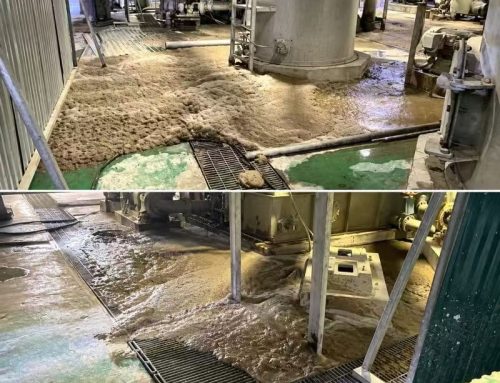
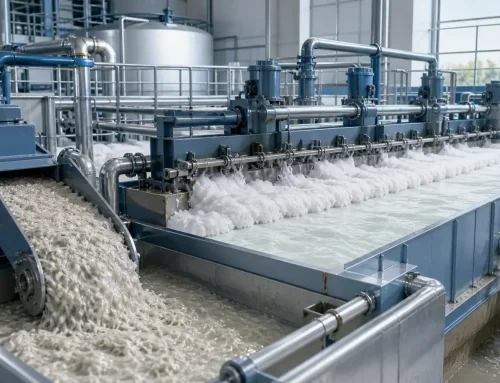
Foaming consequences include pressure drop across the absorber or stripper, CO₂ slippage from entrainment, heat-exchanger inefficiency, and the risk of plant trips and solvent losses. A fertilizer defoamer with strong thermal stability, alkali resistance, and fast action is critical.
INVINO Fertilizer Defoamer for Benfield Systems
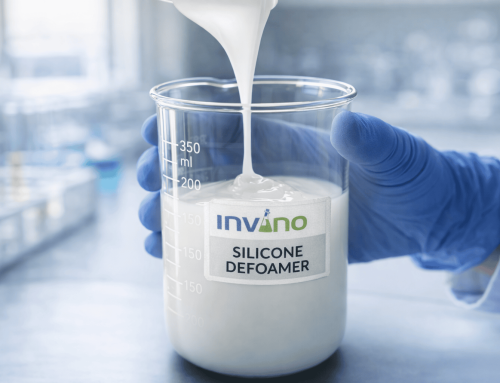
Recommended: INVINO-G382 — Polyether Defoamer for CO₂ Absorption
A polyether fertilizer defoamer built for Benfield CO₂ systems: high thermal stability (≥150°C), alkali resistance, low VOC, and compatibility with corrosion inhibitors, hot K₂CO₃ and DEA solutions. Low-dosage, long-lasting performance in highly variable gas feed conditions and aging or retrofit plants — a performance alternative to UCON 50-HB-5100.
Why Modern Plants Switch to Polyether Fertilizer Defoamers
Plants are replacing traditional mineral-oil defoamers with polyether-based and compound-blend grades that deliver:
- Thermal stability ≥150°C and alkali resistance
- Low VOC emissions and biodegradable options
- Compatibility with corrosion inhibitors and DEA solutions
- Long-term, low-dosage performance that reduces dosing frequency and operating cost
These grades suit a range of Benfield plants worldwide — from coal-based ammonia synthesis to HiPure systems handling complex LNG-derived impurities — where rapid foam collapse, ultra-low residue, and stable performance under variable gas loads are essential. As cost-effective grades with strong K₂CO₃ and DEA compatibility, INVINO fertilizer defoamers have replaced imported brands in ammonia and urea plants across Asia and the Middle East.
FAQ: Optimizing the Benfield Process
Q: How does the defoamer prevent "tower flooding" in the absorber?
A: By collapsing foam fast at the gas-liquid interface, INVINO-G382 keeps the foam layer low in absorber and stripper, preventing the pressure build-up that leads to tower flooding and CO₂ slippage.
Q: Will the defoamer affect the CO₂ absorption efficiency?
A: No. At low dose it improves efficiency by removing foam that causes entrainment and pressure drop, without interfering with the CO₂-carbonate chemistry.
Q: Is the product stable in hot potassium carbonate solutions?
A: Yes. INVINO-G382 is a polyether grade with high thermal stability and alkali resistance, stable in hot K₂CO₃ Benfield solutions and with DEA activators.
Q: Will defoamer carryover affect downstream urea production?
A: INVINO-G382 is low-dose and low-residue, minimizing carryover so it does not interfere with downstream ammonia, methanol, or urea synthesis.
Q: Can this also be used for wet-process phosphoric acid?
A: For wet-process phosphoric acid, see our dedicated phosphoric acid antifoam; G382 is optimized specifically for CO₂ absorption systems.