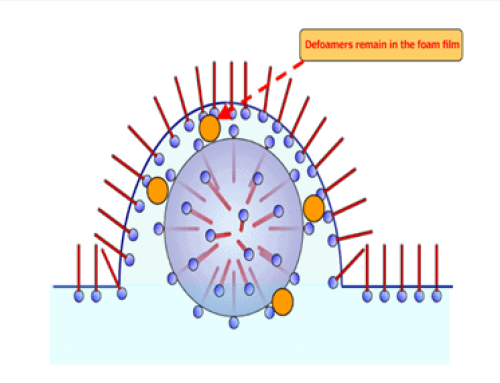
Defoamer for Liquid Detergents: Performance & Stability
A little foam signals "cleaning power" to consumers, but excessive or unstable detergent foam causes real problems — in home appliances and industrial cleaning alike. From reduced cleaning efficiency and difficult rinsing to machine faults and packaging issues, uncontrolled foam hurts product performance, especially in today's concentrated liquid detergents. INVINO® supplies defoamers for liquid detergents engineered for reliable foam control and product stability. For powder formulations, see our wash powder defoamer; for the full range, see our detergent defoamers page.
The Challenges of Uncontrolled Detergent Foam
Excess foam, mainly from surfactants, leads to:
- Reduced cleaning efficiency: foam cushions the mechanical action in washers and dishwashers, hindering soil removal — a problem in industrial dishwashing where efficiency is critical.
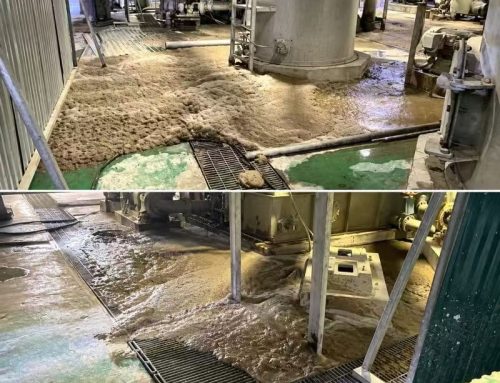
- Equipment issues: high foam trips pressure sensors, causes pump cavitation, blocks spray arms, and overflows that can damage machinery.
- Rinsing difficulties: persistent foam needs extra rinse cycles, wasting water and energy and leaving residue.
- Packaging & handling: air entrainment during production makes accurate filling hard and causes bulging or leaking packages.
- Environmental load: foam overflow adds load to downstream wastewater treatment.
Defoamer Types for Liquid Detergent Formulations
Not all defoamers suit detergent systems — chemistry choice drives stability and performance:
- Silicone emulsions: highly efficient at very low dose; need careful formulation to stay stable in the high-surfactant matrix and avoid spotting. INVINO supplies silicone emulsions optimized for detergent compatibility.
- Non-silicone (mineral/vegetable oil): cost-effective, but check stability against oxidation/yellowing and compatibility.
- Polymer-based (EO/PO copolymers): good compatibility with diverse detergent ingredients and strong stability without the spotting risk of some silicones.
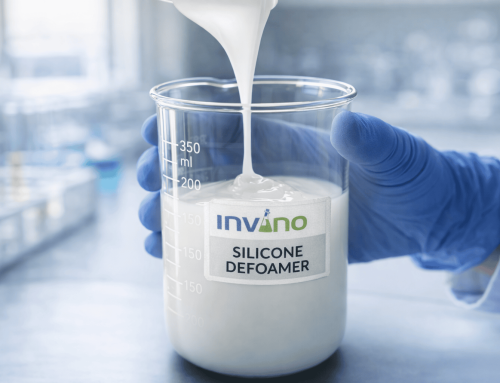
Recommended: INVINO-370 — Silicone Emulsion for Liquid Detergents (30% active)
Controls surfactant foam at low dose, stays clear and stable in the detergent matrix, low residue on fabrics, and compatible with anionic and non-ionic surfactants — suitable for concentrated liquid detergents and HE-machine formulas.
How to Select & Use the Defoamer Effectively
- Compatibility: test with your full formulation (surfactants, builders, enzymes, fragrances) under storage conditions — no separation, cloudiness, or loss of activity.
- Performance: evaluate knockdown and suppression at expected use temperature and water hardness.
- Stability: the defoamer must stay effective through the detergent's shelf life.
- Low residue: it should not leave spots or films on washed items.
- Dosage: find the optimum by testing — overdosing is costly and can hurt cleaning; underdosing leaves foam.
FAQ: Optimizing Liquid Detergent Formulations
Q: How does the defoamer improve the detergent filling process?
A: By collapsing entrained air, it lets the liquid settle to true volume, so filling lines meter accurately and avoid short-fill, bulging, or leaking packages.
Q: Will the defoamer affect the transparency or clarity of the detergent?
A: No. INVINO-370 stays compatible and clear in the detergent matrix at normal dose, without causing cloudiness in transparent liquid detergents.
Q: Is this suitable for "High Efficiency" (HE) washing machines?
A: Yes. HE machines need low foam; INVINO-370 keeps foam in the low range HE detergents require for proper rinsing.
Q: Will the defoamer separate or stratify over time?
A: INVINO-370 is formulated for shelf stability in high-surfactant matrices, resisting separation or loss of activity through shelf life.
Q: Is it compatible with anionic and non-ionic surfactants?
A: Yes, with both. As always, confirm with a compatibility test in your specific formulation.