
Polyether Defoamer for Industrial Applications | Product Details
Product Overview:
INVINO offers a comprehensive range of Polyether Defoamers, including standard EO/PO Block Copolymers and high-performance Polyether Esters. These non-silicone solutions are designed for Fermentation, Paper, Water Treatment, and Construction industries.
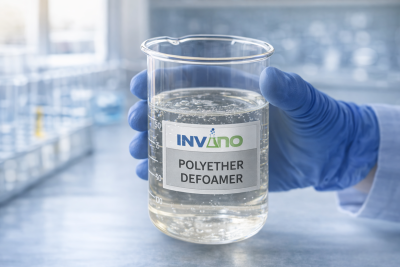
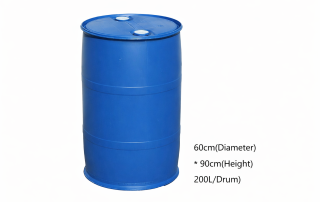
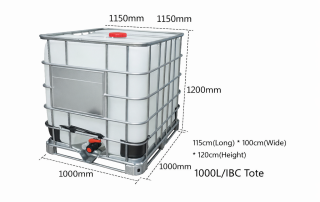
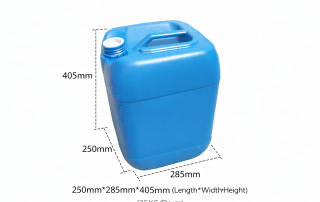
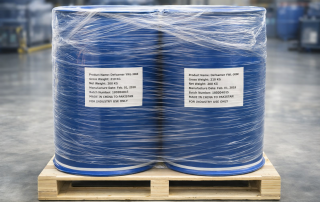
INVINO Polyether Defoamer Products
As a dedicated polyether defoamer factory and supplier, INVINO offers a selection of high-quality polyether defoamer agent solutions. Below are specifications for some of our standard grades, suitable for various defoaming agents applications. Contact us to discuss your specific needs, polyether defoamer price, or to buy polyether defoamer solutions.
| Product Code | Appearance | Solid Content(%) | PH | Viscosity(cps) | Application |
|---|---|---|---|---|---|
| INVINO-103 | Light yellow to colorless transparent liquid | 100% | 4.0-9.0 | 300-600 | Bio-Fermentation: Citric acid, Yeast, Enzyme production, Molasses fermentation. |
| INVINO-103B | Light yellow to colorless transparent liquid | 100% | 4.0-9.0 | 300-600 | Bio-Fermentation: Citric acid, Yeast, Enzyme production, Molasses fermentation. |
| INVINO-8061 | Light yellow to colorless transparent liquid | 100% | 6.0-8.0 | 100-1000 | Papermaking, Drilling Mud, Construction |
| INVINO-8062 | Light yellow to colorless transparent liquid | 100% | 6.0-8.0 | 100-1000 | Papermaking, Drilling Mud, Construction |
| INVINO-8081 | Yellowish to light brown liquid | 100% | 5.0-9.0 | 100-1000 | Building Materials (Concrete, Cementing) |
| INVINO-8082 | Yellowish to light brown liquid | 100% | 5.0-9.0 | 100-1000 | Building Materials (Concrete, Cementing) |
| INVINO-4000 | Yellowish to light brown liquid | 100% | 5.0-9.0 | 100-1000 | Fermentation, Water Treatment |
| INVINO-4000B | Yellowish to light brown liquid | 100% | 5.0-9.0 | 100-1000 | Fermentation, Water Treatment |
Applications Overview
Wide Range of Applications: Our Polyether and Polyether Ester series are engineered for non-silicone demanding environments:
-
Fermentation: Food grade & industrial fermentation control.
-
Water Treatment: Landfill leachate, Desalination, Industrial wastewater.
-
Paints & Inks: Where silicone contamination causes surface defects (Fish-eyes).
-
Construction: Cementing and concrete admixtures.
-
Chemical Process: Polymerization, Agrochemicals.
Frequently Asked Questions about Polyether Defoamer
Yes. INVINO polyether defoamers are non-toxic and strictly tested for biocompatibility. They do not inhibit the growth of bacteria, yeast, or mycelium, nor do they interfere with the metabolic rate.
They can also withstand high-temperature sterilization without losing effectiveness.
Polyether defoamers work best when the system temperature is above the Cloud Point.
Below the cloud point, the product is soluble (transparent) and less effective. Above the cloud point, it becomes insoluble (cloudy) and acts as a powerful defoamer. Please choose a grade with a Cloud Point slightly lower than your process temperature.
Absolutely. Unlike silicone defoamers which cause severe membrane fouling and are hard to clean, polyether defoamers are easy to wash off and generally membrane-friendly.
They are the preferred choice for landfill leachate treatment and desalination plants.
Yes. Polyethers offer excellent compatibility. They rarely cause shrinkage (craters) or fish-eyes, making them safer for use in paints and inks where surface leveling is critical.
However, for very high viscosity systems requiring strong air release, you might need our modified polysiloxane series instead.
The standard shelf life is 12 months.
Polyether is chemically stable and does not stratify easily like emulsions. Store in a cool, dry place away from direct sunlight. No special heating is required in winter.
How to Use Polyether Defoamers & Get Expert Support?
Practical Usage Tips
To get the best performance from polyether defoamers in your production processes, follow these key guidelines:
-
System Compatibility: Always perform a small-scale test with your specific formulation or process stream to ensure the defoamer’s compatibility and effectiveness.
-
Temperature & pH: Choose the right polyether defoamer grade that matches your operating temperature and pH conditions. This ensures stable and efficient foam suppression.
-
Dosage Optimization: Start with a lower dosage and gradually increase if necessary, based on your system’s needs and foam control performance. This helps minimize waste and improve cost-effectiveness.
-
Proper Dispersion: Ensure the defoamer is well mixed within the system. Even dispersion guarantees consistent foam control throughout the process.