How to choose defoamer for adhesive?
Direct Answer
For a low-viscosity acrylic adhesive, select a defoamer that removes both surface foam and entrained microbubbles without separating, floating or creating craters in the dried bond line. Test it in the complete formulation at production shear and application conditions because compatibility depends on the acrylic emulsion, surfactants, fillers, pH and coalescents. Compare deaeration speed and foam suppression together with viscosity, coating weight, wetting, clarity, peel or tack performance, film defects and accelerated storage, then use the lowest effective dose.
Last updated: August 2026
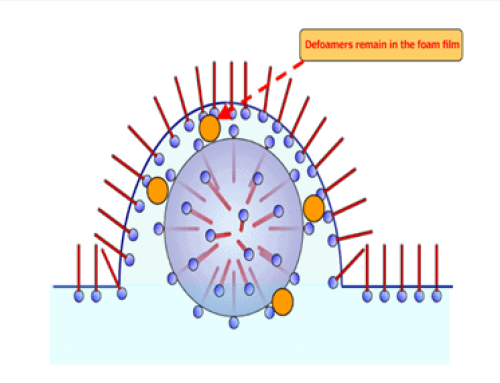
Antifoaming agents are substances with lower surface tension and higher surface activity, which can inhibit and eliminate foam in liquids, which means that antifoaming agents can reduce the surface tension of water, solutions, suspensions, etc so then some bubbles are eliminated. Sometimes defoaming is also called anti-foaming agent. The time of anti-foaming is the main symbol of the quality of the antifoaming agent. In most cases, the key property of anti-foaming agent is to evaluate the time of foam suppression, rather than the initial time of killing foam. But defoaming and foam suppression are relative. Gernarally speaking, products with good defoaming performance will have relatively poor foam suppressing performance.

What kind of defoamer for adhesive?
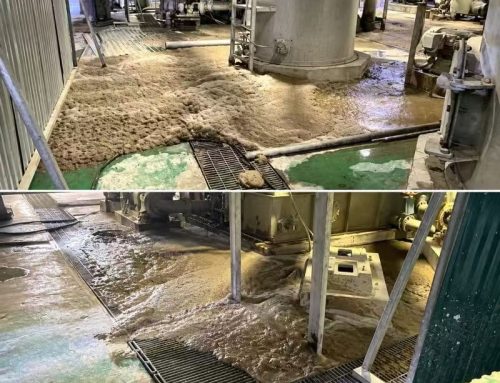
Some components of water-based adhesives are easy to produce bubbles and have a tendency to be stable and lasting. In addition, the rapid stirring during production and the high-speed brushing construction during use also contribute to the generation of foam, which prevents the production from proceeding normally and affects the product quality. The formation of foam is very difficult to produce and apply tape, and the pores of the adhesive layer appear, which affects the outside of the product and the adhesive performance. Therefore, it is necessary to try to destroy the foam or prevent the generation of foam. The most effective method is to use an antifoam agent.
Silicone defoamers have strong defoaming and anti-foaming performance, and are widely used in the coating industry. In the water-based adhesive industry, especially emulsion-type low-viscosity systems, such as laminating adhesives and pressure-sensitive adhesives, it is easy to cause problems such as shrinkage and fish eyes. In addition, after the film formation of the emulsion, due to the surface migration of silane, it will cause a decrease in the bonding strength at a later stage and affect the bonding effect, so it is generally rarely used.
Mineral oil defoamers are commonly used in the water-based pressure-sensitive adhesive and laminating adhesive industries. It is mainly composed of mineral oil, hydrophobic particles, fatty alcohol, emulsifier, etc. The quality of these products is susceptible to mineral oil grades and batch differences. Because the entire system is a thermodynamically unstable system, it is easy to delaminate. It mainly depends on its dispersion in the emulsion to provide defoaming effect. The effect of surfactants, mineral oil defoamers are easy to slick in these systems, which will cause the defoaming effect to decrease seriously, and the uneven distribution of mineral oil will also affect the coating effect, which gives our production And application cause great trouble.