Antifoam for Foam Lift in Oil & Gas Wells: Foam Drainage Solutions for Gas Well Efficiency
What Is Foam Lift and Why It Needs Antifoam Agents?
Foam lift is an efficient liquid-unloading technique for oil and gas wells, especially low-pressure or mature wells where liquid accumulation impedes gas flow. A foaming agent is injected with gas (air or nitrogen) into the wellbore to generate foam; the lower-density foam carries accumulated water or light oil to the surface, reducing bottom-hole pressure and restoring production.
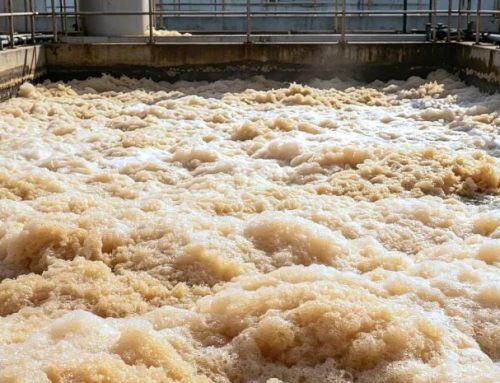
But excessive or uncontrolled foam causes separator overflow, gas-liquid misreading, pressure buildup, and gas locking in compressors. That's why well-designed antifoam agents are crucial in foam-lift systems — regulating foam quantity, modulating foam strength, and maintaining optimal flow.

Causes of Excess Foam in Gas Wells
While foam is essential for liquid lifting, many operational factors cause over-foaming:
- Residual surfactants from previous acidizing or fracturing treatments;
- Turbulent gas-liquid interaction within the tubing or casing;
- High-temperature, high-pressure conditions that stabilize foam films;
- High concentrations of metal ions (Fe³⁺, Ca²⁺) or contaminants forming protective foam membranes;
- Surface-tension gradients that stabilize foam under flow.
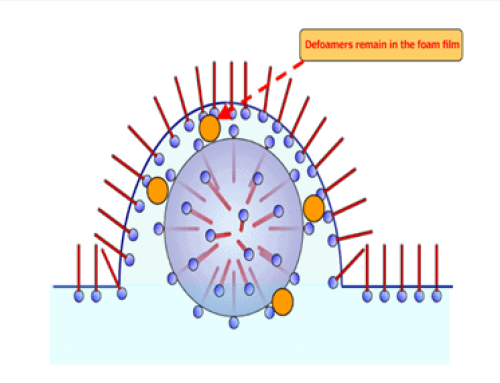
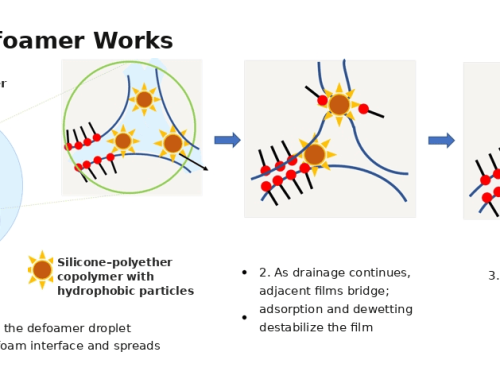
In such cases, effective defoamers break foam films, suppress new foam, and reduce the stabilizing surface-tension gradient, restoring stable gas production.
Types of Antifoam for Foam Lift
There is no universal antifoam for every well; multiple chemical systems are tailored to field conditions:
1. Silicone-Based Defoamer
Composition: modified polydimethylsiloxane (PDMS). Advantages: fast foam knockdown, excellent thermal stability. Consideration: may reduce foamer effectiveness if not carefully dosed.
2. Polyether (GPE) Antifoam
Composition: glycerol polyether and EO/PO block copolymers. Advantages: good compatibility with foaming agents, mild suppression. Consideration: slightly lower efficiency under extremely saline conditions.
3. Hydrocarbon-Based Defoamer
Composition: mineral oil, fatty alcohols. Advantages: affordable, easy to apply in large volumes. Consideration: limited temperature tolerance, risk of emulsification.
4. Composite Antifoam Formulas
Composition: blend of polyether, silicone, and alcohol-based solvents. Advantages: balance of foam control and compatibility. Consideration: may require pilot testing to fine-tune.
Choosing the Right Defoamer for Different Oilfield Conditions
- Mature or low-pressure gas wells: use a polyether (GPE) antifoam to gradually suppress foam without affecting lift.
- High-salinity or scaling-prone wells: choose EO/PO block copolymers with hydrophobic tuning to resist ion interference.
- Intermittent foam-lift operations: use INVINO-1080, a polyether-silicone product with strong foam control for fluctuating well conditions.
- Wells with paraffin or emulsions: consider composite systems with dispersing solvents and emulsion breakers.
INVINO-1080: High-Efficiency Foam Drainage Defoamer
INVINO has over 15 years of experience producing customized antifoam agents for oilfield applications, designed for complex reservoir fluids, varying temperatures, and demanding mechanical conditions.
Recommended: INVINO-1080 — Foam Drainage & Gas Collection Defoamer
A polyether-silicone emulsion defoamer (special polyether silicon, silicone grease, fumed silica) for foam drainage and gas collection. It controls stable foam from minerals, organic matter and foaming agents, with "three-resistance": oil, acid/alkali, and mineralization resistance.
| Appearance | Emulsion, weak anion |
| pH | 7.0-9.0 |
| Viscosity | 800-2000 cps |
| Density (25°C) | 1.0-1.1 g/cm³ |
| Three Resistance | Oil / acid-alkali / mineralization |
| Add Point | Air pipeline or gas-collecting station exchange pipeline |
| Add Method | Intermittent shock or continuous metering-pump injection |
| Dosage | 0.01-0.5% |
FAQ: Defoamers for Foam Drainage in Oil & Gas Wells
Q: What causes foam that requires foam drainage treatment?
A: Natural surfactants, gas influx, mechanical agitation, and residual stimulation chemicals; foam accumulates in low-pressure or low-flow wells, obstructing liquid unloading and reducing production.
Q: Why is a defoamer necessary in foam drainage?
A: To break stable foam films and restore normal flow. Without control, excess foam causes slugging, backpressure, gas-liquid misreading, and surface-equipment shutdowns.
Q: What type of defoamer is best for gas wells?
A: It depends on the well — silicone-based for fast/high-temperature, polyether (GPE) for foamer compatibility, hydrocarbon for large-volume/cost, and composite formulas for variable conditions.
Q: Will the defoamer interfere with the foaming agents used in foam-lift?
A: If overdosed or injected too early, yes. Proper timing and dosage are crucial — defoamer is usually injected after foam has helped lift liquids.
Q: How is defoamer typically injected in foam drainage systems?
A: Via capillary strings (continuous), surface-controlled intermittent pumps, or downhole injection; the strategy depends on well type, foam load, and production targets.
Q&A: Optimizing Foam Lift Operations
Q: Why do we need antifoam if we injected surfactants to create foam?
A: Foam lifts liquid, but excess foam causes separator overflow and gas locking. INVINO-1080 regulates foam quantity so lift stays efficient while downstream equipment runs stably.
Q: What happens if foam enters the gas compressor?
A: Foam carryover causes liquid slugging, vibration and possible damage. Controlling foam at the separator prevents foam reaching the compressor.
Q: Will this defoamer affect the downstream TEG dehydration unit?
A: At correct dosage INVINO-1080 is compatible and low-carryover, so it does not disrupt the TEG dehydration unit.
Q: Where is the optimal injection point for the antifoam?
A: At the air pipeline or gas-collecting station exchange pipeline, by intermittent shock or continuous metering injection, typically after foam has lifted liquids.
Q: Can it be used in extreme cold weather (winterization)?
A: INVINO-1080 is stored 0-40°C; for extreme cold, contact our team for winterized handling and dosing advice.