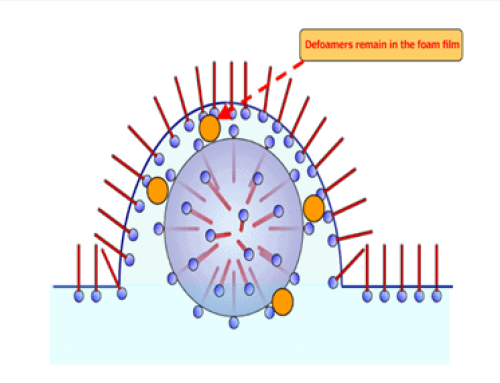
Defoamer for Beet Sugar Production Solutions
Direct Answer
A beet-sugar defoamer should control foam during juice handling, clarification, evaporation and crystallization without impairing clarification, filtration, color or crystal recovery. Select a processing aid that works across the mill’s actual temperature, pH and Brix range, has low carryover, and meets the food-processing regulations of the destination market at the intended use level. Test it in real beet juice, start at the lowest effective dosage at a well-mixed addition point, and monitor foam, juice clarity and color, evaporator stability and crystallization performance.
Last updated: August 2026
Sugar mills producing beet sugar face unique foam challenges during the various stages of the production process. Our defoamers for beet sugar production help manage foam in the key stages, including juice clarification, evaporation, and crystallization. For a more complete solution tailored to all sugar mills, visit our full guide on Defoamers for Sugar Mills for optimal foam control across cane and beet processing.
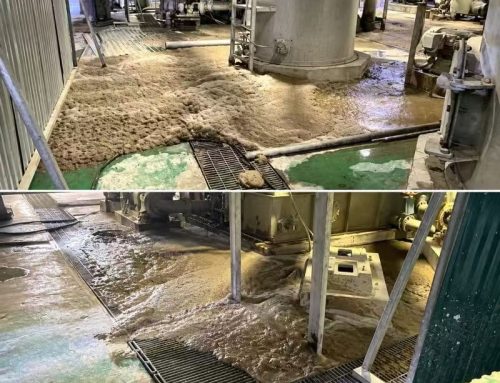
During beet sugar processing, various mechanical and chemical reactions occur that lead to foam generation—especially in high-temperature and high-shear conditions. Stages such as slicing, diffusion, and purification produce foam due to the presence of natural surfactants like plant proteins, pectin, and sugars. While foam might seem harmless at first glance, it has serious consequences for production efficiency and quality control:
- Foam blockage in pipelines or equipment leads to overflows or costly shutdowns.
- Increased mechanical load on pumps and agitators results in higher energy consumption and wear-and-tear.
- ⚠️ Reduced sugar extraction efficiency, causing loss of valuable sugar content and higher residual waste.
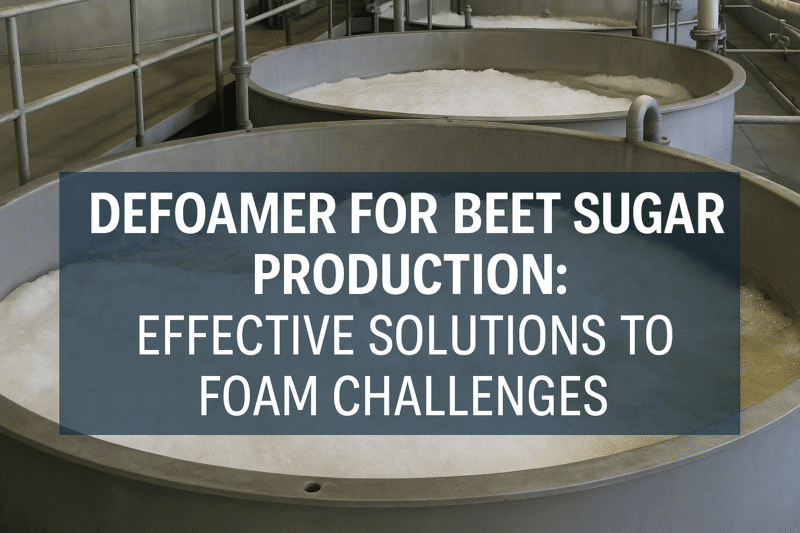
Without proper foam control, these issues can disrupt continuous processing and increase operational costs significantly. That’s why selecting the right Defoamer for Beet Sugar Production is crucial.
Beet Sugar Processing Flow: Key Stages That Create Foam
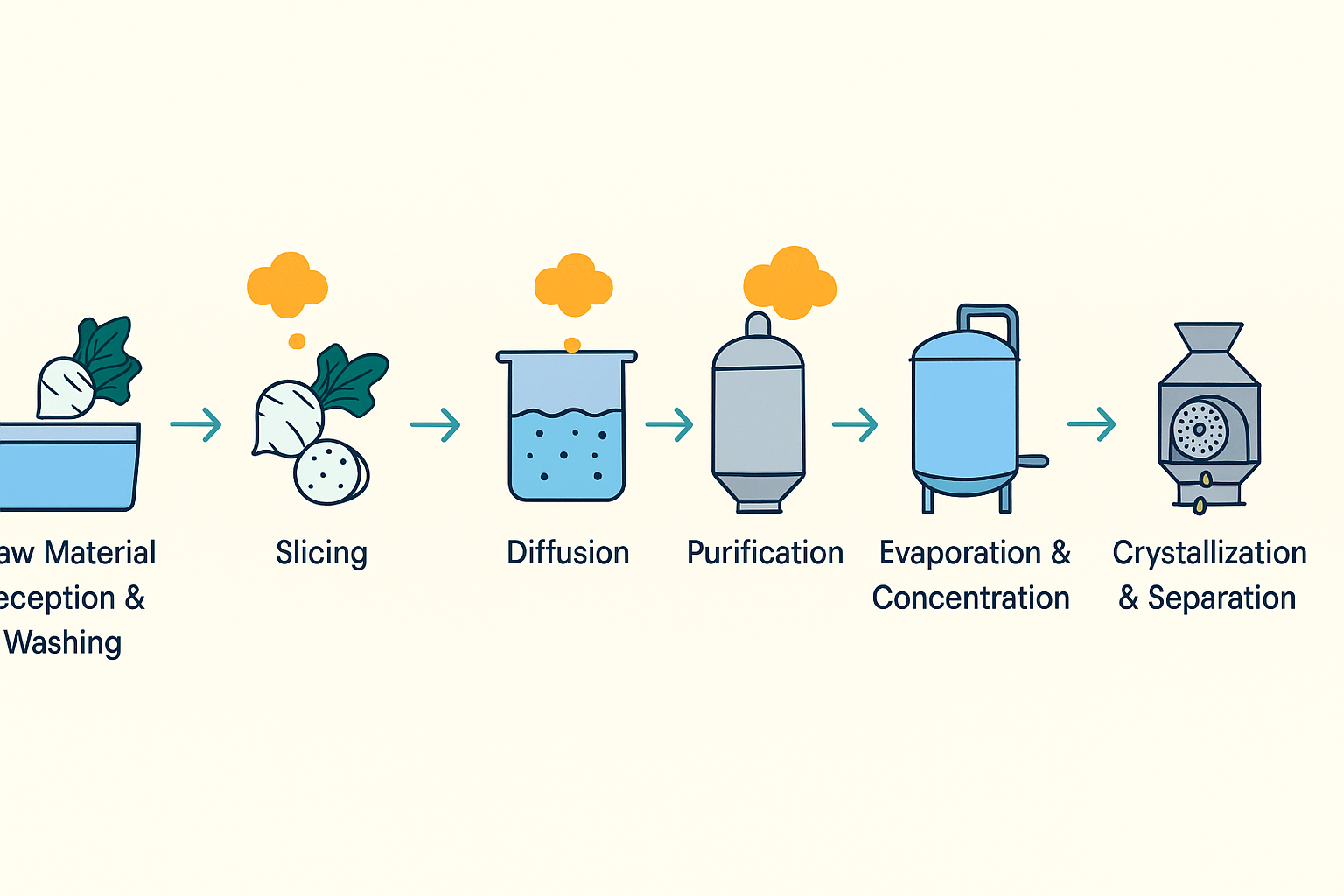
Below is the general process flow of beet sugar production. Each stage presents unique foaming challenges:
- Raw Material Reception & Washing – Soil and debris are removed from beets. Clean handling here reduces organic loading downstream.
- Slicing – Beets are cut into thin cossettes. This releases sugar-rich juice along with pectin and proteins—primary foam contributors.
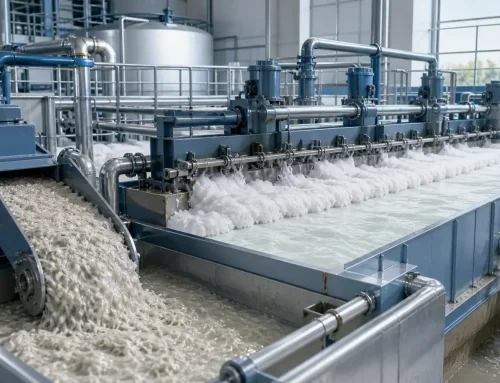
- Diffusion – Beet slices are steeped in hot water to extract sugar. This is a high-risk foam stage due to temperature, agitation, and soluble organic matter.
4. Purification – Lime and CO₂ are added to precipitate impurities. Chemical reactions here create chemical foams alongside microbial foam.
5. Evaporation & Concentration – Excess water is removed to create thick syrup. Though lower in foam generation, residual foam must still be managed.
6. Crystallization & Separation – Sugar crystals form and are spun out via centrifuges. Foam can affect separation efficiency and product clarity.
Foam issues are most severe during the diffusion and purification stages—making them the priority for Defoamer for Beet Sugar Production application.
Which Defoamer for Beet Sugar Production Should You Choose?
Polyether Defoamers
These water-dispersible defoamers are popular for their economy and low residue characteristics.
Pros:
- ✅ Excellent compatibility with aqueous systems
- ✅ Food-safe, low-VOC, and cost-effective
- ✅ Readily biodegradable in effluent streams
Cons:
- ❌ Short-lived suppression effect under high agitation
- ❌ Less effective against stable biological or protein-based foams
Ideal for: Clean systems, automated factories, cooler climates (e.g., Russia, Eastern Europe)
Silicone Emulsion Defoamers
These defoamers combine the instant action of silicone oils with stable emulsifiers that enhance their distribution in aqueous environments.
Pros:
- ✅ Ultra-low surface tension for rapid defoaming
- ✅ Resistant to high temperatures and alkaline pH
- ✅ Long-lasting suppression with low dosage levels
Cons:
- ❌ Slightly higher cost, may require controlled dosing equipment
Recommended Models:
-
INVINO-530C: Recommended for complex, impurity-rich systems
For more details on how our products can improve your sugar mill’s efficiency, visit our guide on Defoamers for Sugar Mills.
Case Studies: What Customers Are Saying?
Case: Russian Sugar Beet Plant
- Challenge: Seasonal production spikes and need for low-cost foam control
- Solution: Polyether-based defoamer maintained stable operations without residue
- Result: Energy savings of 10%, and better pump performance
Case: Egyptian Factory in Hot Climate
- Problem: Severe foaming during diffusion and purification
- Action: Switched from GPE defoamers to INVINO-530C
- Outcome: Foam reduced by 80%, downtime decreased, sugar recovery improved by 30%
Need assistance choosing the right product? Contact Our Experts
Conclusion: Eliminate Foam. Enhance Efficiency.
Using a reliable Defoamer for Beet Sugar Production means:
- ✅ Less production downtime from foam blockages
- ✅ More sugar recovered per batch
- ✅ Lower power consumption and maintenance frequency
- ✅ Cleaner operation with consistent quality
Whether you manage a modern automated facility or a traditional sugar mill, we have tailored solutions for your foam control needs.
Contact us for personalized recommendations and free samples: