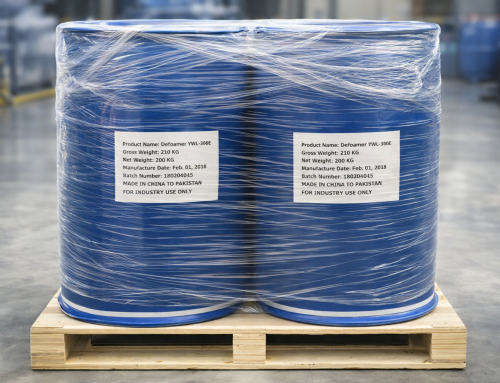
Why Should Mining Use a Mining Defoamer?
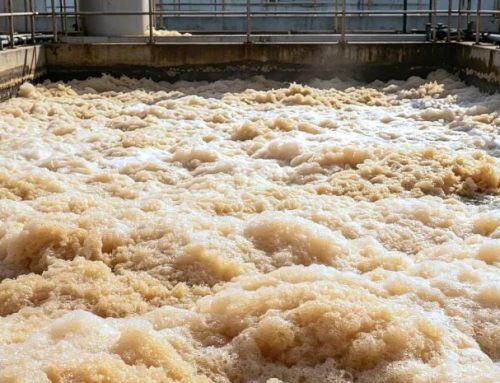
In the mining industry, foam is more than an annoyance — it can disrupt production, reduce mineral recovery, and cause costly equipment downtime. Whether it occurs during mineral processing, tailings treatment, or from the interaction of processing chemicals, foam poses significant challenges to operational efficiency and product quality. This guide explains the causes and consequences of foam, how a mining defoamer works, and shares a real customer case.
Request a Free Sample
Understanding Foam in Mining Operations
Causes of Foam Formation in Mining
- Mineral flotation: reagents added to the mineral slurry mix with water and entrapped air, generating substantial foam. For related froth chemistry, see froth flotation. Excess foam beyond the process requirement interferes with reagent-mineral contact and reduces separation efficiency.
- Tailings treatment: fine particles, water and additives combine to produce stable foam that hinders solid-liquid separation, making dewatering less efficient.
- Use of mining chemicals: complex interactions among beneficiation reagents form persistent foam that accumulates rapidly and is hard to control without intervention.
Negative Impact of Excess Foam
- Reduced separation efficiency: foam forms a barrier over the slurry, preventing reagents from contacting the ore and lowering recovery.
- Equipment blockages: foam clogs pipelines, cells and equipment, forcing unscheduled shutdowns and raising costs.
- Mineral loss: overflowing foam carries away valuable mineral particles, reducing resource utilization.
- Safety hazards: persistent foam buildup can cause pressure increases and equipment malfunctions, posing plant-safety risks.
How Does a Mining Defoamer Work?
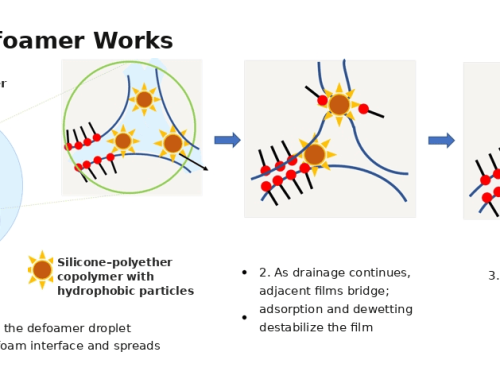
A high-performance mining defoamer combats foam through a multi-faceted mechanism:
- Surface tension reduction: it penetrates the foam's liquid film and reduces surface tension at the gas-liquid interface, collapsing bubbles quickly.
- Disruption of bubble elasticity: by interfering with the foam film's elastic properties, it prevents bubbles from reforming.
- Accelerated liquid drainage: it promotes faster drainage from the foam film, accelerating collapse and restoring normal slurry flow.
These combined actions remove foam swiftly and suppress new foam, giving a stable environment for mineral separation.
Benefits of Implementing a Mining Defoamer
- Enhanced production efficiency: separation runs at peak efficiency, raising recovery of valuable minerals.
- Reduced equipment downtime: fewer foam blockages mean fewer unscheduled shutdowns.
- Improved resource utilization: valuable particles stay in the process instead of being carried off with foam.
- Increased safety: stable conditions reduce pressure build-ups and malfunctions.
- Environmental compliance: modern formulations are eco-friendly and minimize contamination risk around mining sites.
Case Study: Mining Defoamer in Mineral Processing
Background: a prominent mining company struggled with persistent foam during mineral processing. Excessive foam hindered separation of valuable minerals from gangue and caused frequent blockages in cells and pipelines — leading to downtime, higher maintenance costs, and lower recovery.
Implementation: our technical team ran small-scale trials to set the optimal concentration and dosing schedule, installed a dosing system to inject defoamer at critical foam points for rapid, continuous suppression, and deployed foam monitoring for dynamic adjustment under fluctuating conditions.
Results & benefits: ~15% increase in mineral recovery, ~20% reduction in equipment downtime, improved product quality from fewer foam-related impurities, and enhanced safety and environmental performance for a sustainable operation.
Securing a Competitive Advantage
Foam-related challenges can significantly compromise production efficiency, raise maintenance costs, and jeopardize safety. A specialized mining defoamer rapidly controls and prevents foam, leading to higher mineral recovery, reduced downtime, improved product quality, and safer operation. For mining companies aiming to optimize processes, integrating a robust defoamer is a smart, sustainable choice. To learn more or access expert technical support, explore our mining defoamers range or contact our team.
Q&A: Boosting Mineral Recovery & Operational Safety
Q: How does excess foam negatively impact mineral recovery?
A: Foam forms a barrier over the slurry, preventing reagents from contacting the ore, which lowers recovery and reduces final product quality and yield.
Q: Why is foam a problem in tailings treatment?
A: Fine particles, water and additives form stable foam that hinders solid-liquid separation, making dewatering less efficient and causing delays.
Q: Can defoamers reduce equipment maintenance costs?
A: Yes. By preventing foam that clogs pipelines and cells, a defoamer reduces unscheduled cleaning shutdowns, lowering maintenance and downtime costs.
Q: How does the mining defoamer physically eliminate foam?
A: It reduces surface tension to collapse bubbles, disrupts bubble elasticity to prevent reformation, and accelerates liquid drainage for fast, lasting knockdown.
Q: What is the best way to dose the defoamer?
A: Set the optimal concentration by trial, then dose at the points where foam is most severe — ideally with a dosing system and foam monitoring. Contact our lab for a grade and dose match.