
Silicone-Free Antifoams & Non-Silicone Defoamers
Compare Mineral Oil, Fatty Alcohol and Polyether Grades for Your Process

INVINO® non-silicone defoamers are antifoaming agents that control industrial foam without using silicone (PDMS) as the active component. They use mineral oil, fatty alcohols, polyether block copolymers, or polyether esters as active ingredients. Select a grade for your process temperature, pH, foam conditions and downstream requirements. Evaluate foam control alongside surface appearance, formulation compatibility and product recovery in your own system.
Request a Grade RecommendationCompare Non-Silicone Options
| Process / candidate | Check before selection |
|---|---|
| Coatings, inks, adhesives Mineral oil | Film appearance, adhesion and recoatability. |
| Paper wet-end / pulp washing Fatty alcohol | Alkali stability and sizing compatibility. |
| Fermentation / wastewater Polyether | Biological compatibility; membrane compatibility where relevant. |
| Phosphoric acid / chemical systems Polyether ester candidates | Stability and performance in the actual acidic or high-electrolyte medium. |
Active content, carrier, dilution and packaging vary by grade. Request the current TDS and confirm any food-use or other compliance requirements for your application and destination.
INVINO® Non-Silicone Defoamer Product Lines
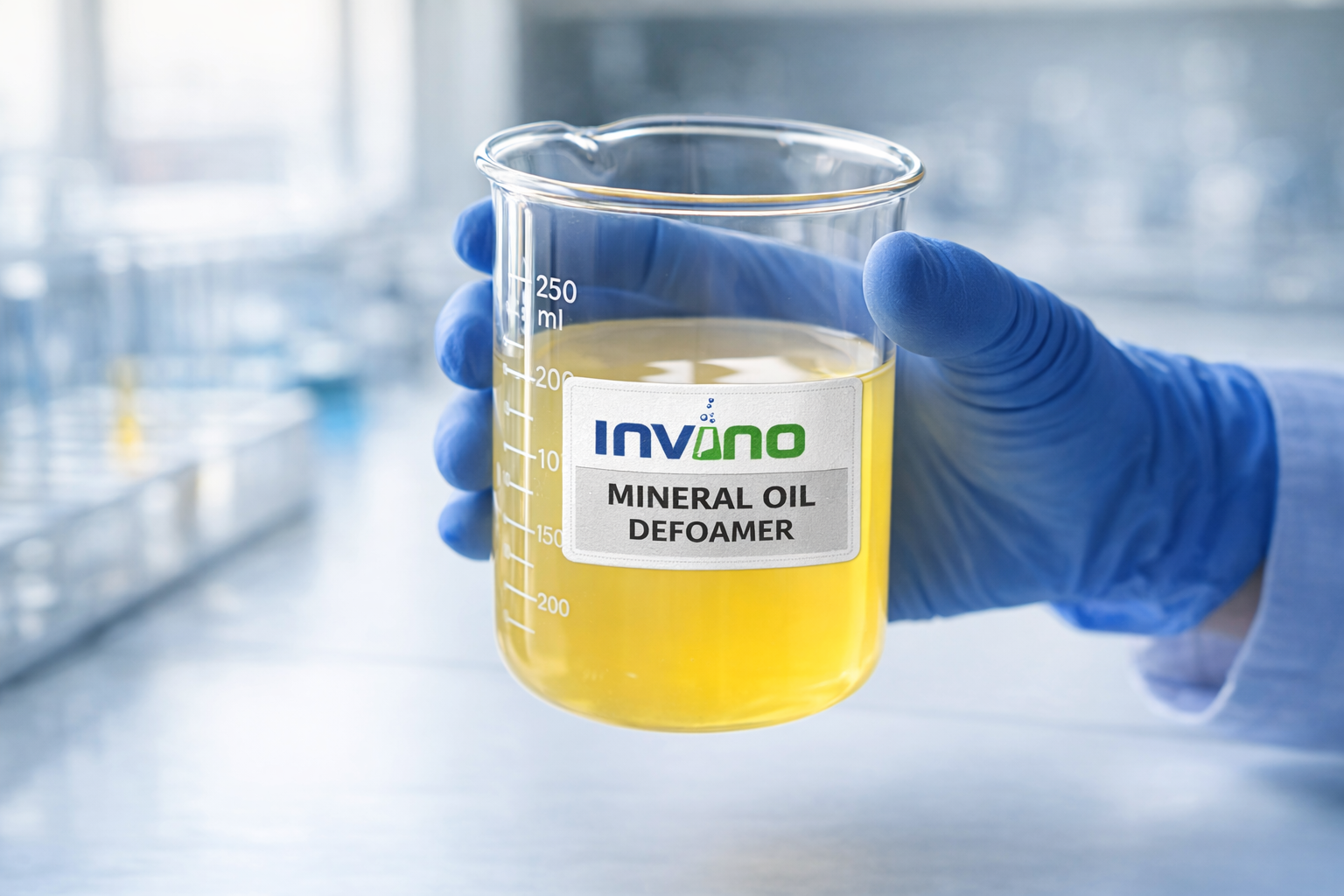
Mineral Oil Defoamer
For evaluation in waterborne architectural paints, industrial coatings, adhesives and printing inks. Check grade-specific active content and composition, then assess foam control, film appearance and recoatability in your formulation.

Fatty Alcohol Defoamer
For evaluation in paper machine wet-end white water systems and kraft pulp brownstock washing. Confirm the selected grade's composition and alkali stability, and test compatibility with AKD or rosin sizing in your process. For food-contact packaging board, request documentation for the specific grade and destination market.
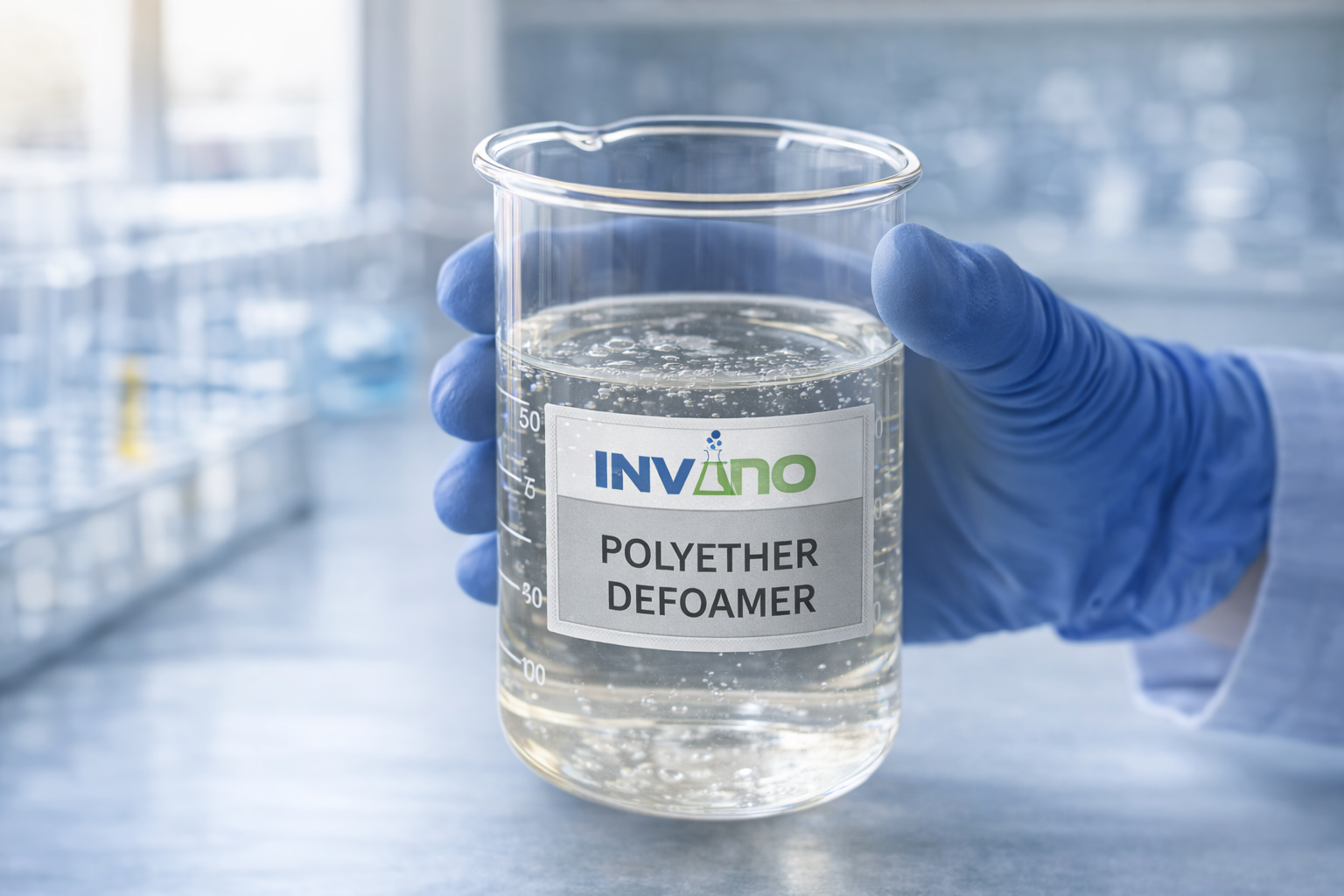
Polyether Defoamer
EO/PO block copolymers for fermentation bioreactors (citric acid, yeast, antibiotics), industrial wastewater aeration tanks, MBR units, pulp mills, and cementitious construction. Validate biological compatibility and request any required food-use or Halal documentation for the selected grade.
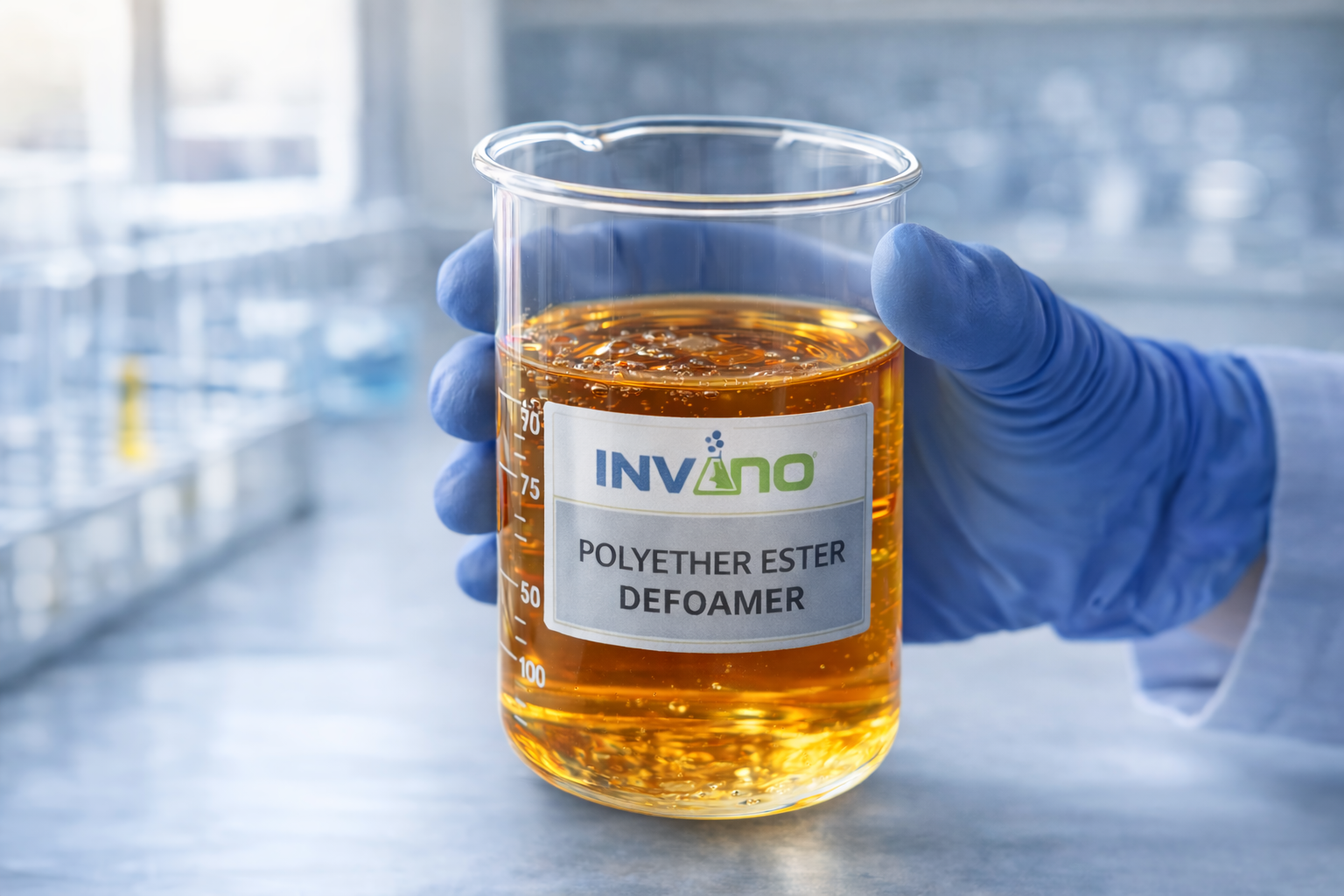
Polyether Ester Defoamer
Chemically modified polyether ester variants for wet-process phosphoric acid production, industrial washing systems, and leachate treatment. Designed for aggressive acidic or high-electrolyte environments where standard polyethers lose performance.
Non-Silicone Defoamer — Technical Guide
What is a non-silicone defoamer?
A non-silicone defoamer controls foam without using silicone (PDMS) as its active component. Common chemistries include mineral oil, fatty alcohol, polyether and polyether ester. Select the exact grade for the process and verify its composition and compatibility.
What is the difference between silicone and non-silicone defoamers?
Silicone defoamers use silicone-based actives such as PDMS; non-silicone defoamers use other chemistries such as mineral oil, fatty alcohol or polyether. Performance and compatibility depend on the grade, dose and process. Neither chemistry alone establishes food-use suitability or Halal status.
Which industries require non-silicone defoamers?
Evaluate silicone-free options where the process specification or compatibility testing calls for them:
- Waterborne Paints & Coatings — Evaluate film appearance and inter-coat adhesion. → Mineral oil defoamers
- Pulp & Paper Manufacturing — Check compatibility with AKD/rosin sizing and paper quality. → Fatty alcohol defoamers
- Fermentation & Food Processing — Silicone-free chemistry alone does not establish food-use suitability or Halal status. Confirm the documentation for the specific grade, application and destination market. → Polyether defoamers
- Adhesives & Printing Inks — Evaluate adhesion and surface appearance. → Mineral oil defoamers
- Phosphoric Acid Production — Check acid stability and compatibility with the actual process. → Polyether ester defoamers
How to Select the Right Non-Silicone Defoamer
Non-silicone defoamer selection depends on your process medium chemistry and the reason silicone is excluded:
- Film appearance critical (coatings, inks, adhesives) → Mineral oil compound defoamers
- Paper machine sizing compatibility required → Fatty alcohol emulsion defoamers
- Biological systems (fermentation, wastewater) → Polyether block copolymer defoamers
- Aggressive acid or high-electrolyte systems → Polyether ester defoamers
- Dry-mix systems (mortar, detergent, agrochemical WP) → Confirm the powder grade's active chemistry; silicone on an inorganic carrier is not silicone-free.
Not sure which type fits your process? Submit your system parameters using the form below — our team can discuss candidate grades and confirm evaluation sample availability.
How to Get the Right Non-Silicone Defoamer Sample
Submit Your Process Parameters
Tell us your process medium, operating temperature, pH range, and why silicone is excluded from your system (film appearance, process specification, sizing compatibility, etc.).
Laboratory Formula Matching
Our R&D engineers select the correct non-silicone active component type and grade based on your parameters. For complex systems, we replicate your process conditions in our laboratory to verify defoaming performance before sample dispatch.
Confirm Sample & Shipping Details
Sample availability, quantity, sample cost, shipping charges, dispatch timing, estimated transit time and accompanying documents are confirmed for the selected grade and destination before shipment. Any freight credit or refund must be agreed for the specific order.
Request a Non-Silicone Defoamer Sample or Consultation
Start with your application and why silicone is excluded. Add temperature, pH, current product and dose if known. Our team will discuss candidate grades and confirm sample conditions, delivery arrangements and the expected response time for your request.