
Why Does Process Foam Keep Coming Back? 3 Defoamer Mismatches Stabilizing Your Foam
Industrial foam control is rarely as simple as checking a product data sheet and pouring an additive into a tank. Process engineers and plant managers frequently hit a frustrating bottleneck: a defoamer is added, foam disappears instantly, but within minutes or hours, the foam bubbles back to the surface.
When foam limits production capacity, causes safety overflows, or forces frequent maintenance shutdowns, plants usually default to increasing the dosage or swapping chemical brands. However, adding more chemical variables to a broken baseline rarely fixes the issue. If you have tried multiple antifoams and the foam remains uncontrollable, the problem is not necessarily product quality—it is an unresolved mechanical or chemical mismatch. To stabilize your fluid matrix, technical teams must analyze the three ignored root causes of recurring foam and establish a systematic evaluation protocol across different industrial application fields.
1. Chronic Gas Generation vs. Flash Defoaming Limitations
Every liquid anti-foaming agent operates through two distinct physical mechanisms: defoaming (destroying existing surface macrofoam) and antifoaming (inhibiting the generation of new microbubbles within the matrix).
[Antifoaming Phase] —> Long-term prevention of microbubble stabilization (Persistent Suppression control)
Dynamic Destruction and Recurrent Foam Risks
Many generic defoamers provide excellent initial knockdown performance. However, in dynamic systems characterized by continuous mechanical agitation, high-shear pumping, or gas-generating chemical reactions, a simple knockdown agent is insufficient.
Without adequate persistent antifoaming properties, the active hydrophobic components (such as modified polysiloxanes or polyether blocks) are quickly emulsified, adsorbed by suspended solids, or chemically degraded by the matrix. Once the active molecule loses its orientation at the air-liquid interface, new foam immediately regenerates. Laboratory teams must look beyond the initial 10-second breakdown speed and measure the suppression longevity under dynamic simulation.
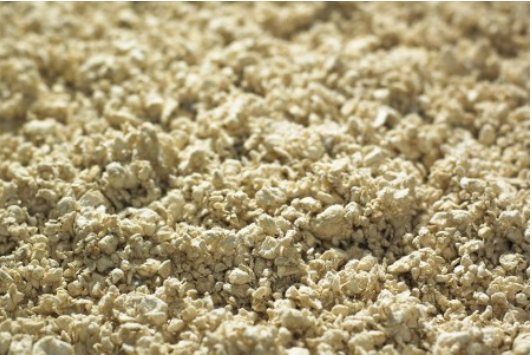
2. The Fine Balance of Defoamer Compatibility: Defective vs. Dissolved States
The compatibility between an anti-foaming emulsion and the continuous process fluid is one of the most misunderstood parameters in fluid engineering. A common operational error is choosing a chemical that is either completely incompatible or excessively compatible.
Severe Incompatibility (Insufficient Dispersion): If the active defoamer droplets are too large or hydrophobic for the specific surfactant system, they cannot remain suspended. The active components quickly agglomerate and plate out onto container walls, process piping, or filter meshes. This manifests as a sharp drop in foam control within minutes of dosing, along with surface defects like craters or fisheyes in coating applications.
The Solubilization Trap and Incompatibility Thresholds
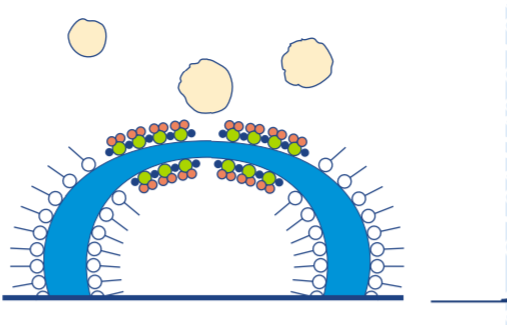
Excessive Compatibility (Over-Solubilization): Conversely, if the antifoam chemistry is highly compatible with the system, the active molecules dissolve completely into the liquid matrix. Once fully solubilized, the agent loses its interfacial activity and can no longer migrate to the bubble wall to cause film rupture. The additive becomes visually invisible and functionally dead, yielding near-zero foam control.
An optimized anti-foaming agent must exist in a state of controlled, persistent incompatibility. It must be insoluble enough to migrate rapidly to the air-liquid interface, yet dispersible enough to avoid phase separation or surface contamination. This thermodynamic window varies significantly based on system surfactant loads, temperatures, and shear forces.
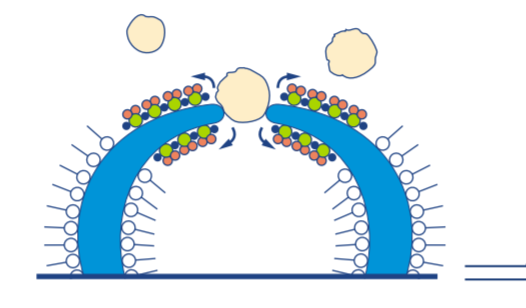
Localized Surface Tension and Film Drainage Spreading
As micro-interactions dictate long-term performance across variable processes, understanding surface tension gradients is crucial. When an active droplet spreads successfully, it forces thin film drainage to the point of complete structural failure.
At this exact interface, if the defoamer molecule lacks the proper spreading coefficient, it will remain stagnant as an inert drop, failing to displace surrounding surfactant stabilizers. Thus, engineering the correct balanced hydrophobicity ensures the particle actively drives dewetting across the air-liquid boundaries without falling into over-solubilization traps.
3. Dosing Methodology and Process Parameter Mismatches
A common misconception on the factory floor is that defoamers can be added arbitrarily at any point in the tank. Chemical dosing requires precise engineering of both timing and location to prevent process failures:
Shock Dosing vs. Continuous Metering
In long-cycle chemical reactions, batch fermentation, or continuous circulation loops, a single slug dose causes an immediate spike in chemical concentration, followed by rapid exhaustion. This approach often leads to early-stage overdosing (which can destabilize emulsions or alter filtration dynamics) and late-stage foam failure. Implementing a split-dosing strategy or continuous low-volume metering via a positive displacement pump ensures a stable, uniform equilibrium of active particles.
Dosing Point Optimization
Antifoams must be introduced at points of maximum turbulence and thorough mixing—such as pump suction inlets or directly adjacent to low-shear agitator blades. Adding chemicals to calm surface zones prevents rapid, uniform dispersion, causing the hydrophobic active material to float in concentrated pockets rather than intercepting microbubbles throughout the bulk fluid.
Temperature and Dilution Variables
Process temperature directly alters fluid viscosity and emulsifier stability. A defoamer formulated for ambient temperature may suffer rapid emulsion breakdown or cloud-point shifts when introduced into a hot process stream. Furthermore, improper field dilution with raw water can alter the hydrophilic-lipophilic balance (HLB) of the additive, inducing premature separation or sedimentation before the chemical ever enters the main line.
4. The Systematic Protocol for Correct Defoamer Selection
To eliminate recurring foam issues permanently, procurement and technical operations should abandon trial-and-error product swaps and follow a structured selection matrix:
Isolate the Root Mechanism: Identify whether air entrainment is driven primarily by mechanical configuration (vortex formation, free-fall pipe discharges) or chemical triggers (surfactants, proteins, organic byproducts).
Evaluate Persistence and Compatibility Simultaneously: Laboratory testing must match field conditions. Shake tests should be supplemented with dynamic sparging or recirculation tests, tracking surface bubble height at 0, 5, 15, and 30 minutes to evaluate long-term persistence alongside phase separation resistance.
Validate Process Integration: Determine the optimum physical form (water-based emulsion, oil-based concentrate, compound, or powder) and composition (silicone, polyether polyol, or non-silicone fatty alcohol) that aligns with your downstream constraints, such as membrane filtration, catalytic sensitivity, or environmental discharge limits.
Request Professional Custom Technical Diagnostics
If your production line is currently battling uncontrollable foam and generic chemicals have failed to stabilize your throughput, a deeper formulation analysis is required. At INVINO, our application engineering group focuses on identifying the underlying physics of fluid matrices rather than pushing fixed catalog products.
We provide data-driven technical diagnostics—encompassing comprehensive system analysis, dynamic shear testing, and customized compatibility evaluations—to map the precise molecular structure and dosing protocol required for your specific plant infrastructure. Visit our dedicated INVINO Technical Desk to submit your runtime metrics, or complete the engineering contact gateway below to coordinate an immediate laboratory validation profile.